• I am resigned to the fate of being a Washington, DC sports fan. Yeah, your former star goalie ends up pooching it in the minors two years after the Stanley Cup? The two-time Cy Young winner gets traded across the country, and the bullpen pitcher is brought up from the minors to pooch a game in one inning and 30 pitches? You destroy the legs and careers of more than a handful of quarterbacks?

    Welcome to my world. And a lot of outdated bobbleheads and sports jerseys. 

    I am resigned to the fate of twenty months taken from my career as I knew it for a quarter of a century. Yeah, you lost your tables to desks with plastic shields that have been ripped off to expose reminders of quarantine for students to pick at all year? You without Gogone? You file ADA paperwork because you’re hearing impaired and come to the realization in August that 28 masked students per class and a new air conditioning unit will add up to understanding no one? You rig a microphone, extra computer as an amp–otherwise business as usual. You reteach yourself how to use the copier, watch the California fires, and second guess if you should be using it at all anyway–all the while with students begging for essays and books in their hands.

    Welcome to my world. And the 2021-22 school year.

    Then something amazing happens. I’m at dinner with a dear friend, one going through his own serious shit, and he expresses faith in our baseball team. He says that, while it might take a couple of years, the farm system is good. The Nationals WANT to win. It will happen. We sit outside, eating dinner on a gorgeous September night, and I believe him. Because I know not all surprises are bad ones.

    That’s what I’ve said to every class these first two weeks of school. It’s difficult to believe, given the state of our country, the state of the world, right now. My August stress dreams as an educator are nothing new. But they took on a more apocalyptic tone this year. Muffled voices, frightened eyes, outbreaks, shouts in school board meetings, so much anger and fear. In August, I needed to remind myself about walk-up songs.

    The last phase of my cancer treatment ended almost exactly four years ago. August 30 to be exact. The decision of my team was chemo, surgery, then radiation. Radiation is a funny thing. Not funny ha ha. It burns some. It can make one tired. There’s a debate between surgeons and radiation oncologists as to where the residual ache at the tumor site comes from, but my guess is it’s a little of both. 

    Or maybe it’s my brain shooting me a reminder of the walk-up songs.

    When I began radiation, I had been through the worst of it. The cancer was gone. This was just insurance. The hair was growing back, I was starting yoga to build muscle mass. All food no longer tasted like metal. Life was getting back to normal. I just didn’t take into account that it would be a new normal until the first day in the machine.

    The problem was that the radiation contraption, and my position in it, was similar to the MRI I had at the beginning of my treatment. Face down, ass up, electronically wheeled into a tube. Less noise, to be sure, but that first time when I lay there and waited for them to take initial images and give me the first shot of the rays, my mind began careening, and time slowed down to a crawl. Then, face in the towel, I found myself unable to breathe. I contemplated banging against the sides of the machine–was honestly a minute from that, but, as I drew a breath into my nose and out of my mouth, the whir started up again, and I was wheeled into daylight. That’s when I knew I needed a better plan. 

    The next day, I showed up to radiation with just that. I am a musician with a penchant for remembering lyrics. So I had planted an earworm firmly in my brain the night before. That’s not difficult. I usually have a soundtrack looping through my mind at all times, and many times songs can rest there for days, like a stubborn weather front. (This week, it’s been Queen’s “Pressure” and Del Shannon’s “Runaway.”) So, the night before my next treatment,  I listened to Marvin Gaye’s “I Heard it Through the Grapevine” letting it sow in the soil of my conscious and subconscious. The next morning,  as I gave the tech my name and birthdate, I explained my plan for anxiety prevention. 

    “If I begin singing while I’m in there, just ignore me. This has me more than a little tense. These are my walkup songs.”

    I doubt I was the first patient to go this route to stave off anxiety. The great thing about radiation (if there is one) is that, since it’s every day for at least six weeks, you develop a relationship fast with the techs. By the second week of my treatment, they would have their own suggestions for a song if I hadn’t come up with one myself. And they’d blast it through their phone so the lyrics would occupy my thoughts, leaving no room for the memories of the trauma I’d been wheeled through already.

    The beginning of this school year has its own residual trauma, for students and teachers. That Thursday morning when we got the call that school was cancelled, much like a snow day, only to have that snow day turn into a snow year. Even when we returned, the four or five in a class, icons on the screen, lack of noise in the halls, students sitting six feet apart at lunch. This wasn’t school as we knew it. In some ways, it isn’t still. As I mentioned above, I lost my tables, there’s an air purifier in my room, masks on everyone and specific mitigation strategies we must follow. We follow the news, knowing that classrooms could be quarantined at any time. Google Meet codes loom in case we are locked down as a whole again, though I doubt that will happen.

    Still, for all our trepidation, our fear of students going from freshman to juniors and sophomores to seniors in a wink (but haven’t they always done that anyway?) my overwhelming feeling as I walked into room 301 a week ago last Thursday was…

    Joy.

    I had students again! I could hear them laugh, listen to them chat with one another, see them nod (or nod off). The surprise, to me, was how natural it all felt. A wink to the surreal, a wink back to now. 

    I am not saying that things aren’t still frightening. A whole lot has gone down in the last 20 months, and these students have had a front row seat. But as they presented their opening project, a “Where I’m From” poem, I saw the same things I’ve seen for over twenty five years. They’re from around the globe. They’re from family. They’re from music and athletics, theater, physics problems and baked goods. They desire what they always have. Acceptance, love, satisfaction in their work. They acknowledge what they always have. War, illness, hatred, and pain. They know full well that they have and will again and again experience surprises. Some of those surprises will require walk-up songs to endure.

    But some of those surprises will be good ones. After the first week, I asked my students to consider some of those good surprises they’d experienced since they came back in the classroom. I encouraged them to look for some.

    Which brings me to the idea of the bid. Psychologist John Gottman describes a “bid” as a signal for interaction and attention. Bids can be verbal or non-verbal. They are how we as human beings let others know our desires. I find Gottman’s use of the word “bid” an interesting one though, since, at its core, a bid is also a gamble.

    We bid on a house, we make a bid in a poker game, athletic teams make a bid on a player as they consider a trade. We make bids low, putting as little of ourselves into the pot in case the other person offers more and we lose. In case our bid isn’t accepted. Or accepted at too high a price. I’ll say it again. A bid is a gamble. Rejection is always a possibility.

    So here’s what my other message has been this week for the young Gen Z’ers in those seats. Bid high. Share vulnerabilities to share a talent. The two go hand in hand. I have no guarantees that we’ll succeed. That others will always understand. Especially right away. Lord knows I’ve had plenty of lessons fall flat. Plenty of “I don’t get it” stares when I try something unorthodox. But I don’t mind being exposed nearly as much as I used to.  My days are numbered. All of ours are. So why not take the larger risk for a good surprise while we still can? 

    The Nationals made a bid, took a huge risk getting rid of two favorite veteran players to bring in some new talent. Time will tell if this gamble will pay off. But I have to say I appreciate the faith that my friend expressed the other night. Caution is one thing, but nothing good ever comes from fear. So let’s hold hands and do this together. 

    Let’s choose a walk-up song, make that bid, and take that leap before it’s too late.

    Let’s find those good surprises.
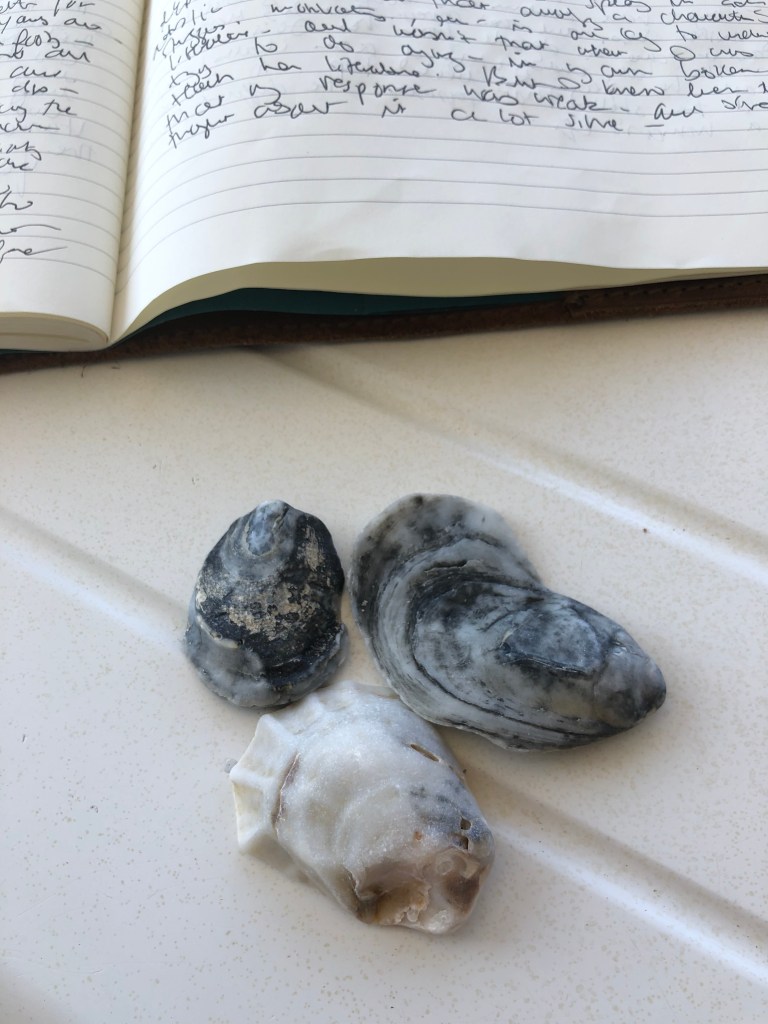
  • On a walk with my parents yesterday, I shell hunted beside them. It’s a long standing pastime of my dad’s in particular. He is the one who always encouraged me to slow down and notice things like dimes on the sidewalk, a salamander under a maple leaf–these visual details I appreciate so much now as I adjust to hearing loss and have to neuro-plastic myself to new intelligences and new kinds of images to fill my pages and my time. So I have slowed down, gotten better at spotting treasures like a half a sand dollar (a sand fifty cent, my husband calls it) a piece of a conch, a shark’s tooth. A few years ago, I was the first to point out the outer reaches of tentacles from a Portuguese Man-O-War. Yards down the beach, sure enough, was the colony–a floating sandwich bag filled with purple and red.

    Yesterday, my parents and I walked along the water’s edge, better for finding shells tossed from the sandbar some 50 yards out. The packed surface is also more stable for our footing, and our backs, as our bodies have shifted and aged like the sand beneath the waves. The surf is rougher for all of us these days. Still, it was a beautiful morning, and I strolled the beach with my parents like I have for almost half-a-century, appreciative of my father’s patience and eagle eye like I have been for just as long. He stopped and stooped to pick up a shell. I didn’t have a chance to see what it was; I just heard his comment as he dropped it back on the sand before a wave covered our feet.

    “Beautiful, but broken.”

    The author Tana French said at a reading I attended once that the secret to writing characters is to first realize that we are all broken and then determine the cause of our characters’ brokenness. That made a lot of sense at the time, and I was quick to regale her wisdom to a class of AP Literature students I taught the next fall. What happened during that lesson is one of the many times in my 28 year career where I was schooled by one of the ones I was supposed to be teaching.

    “That’s crap!” Emma, I’ll call her, bluntly offered. “We are NOT broken. We struggle. We are all different. But to say we’re broken is a judgement. The connotation is negative. And I refuse to be judged that way by you or anyone else.”

    Oof. I think I backpedaled and tried to explain that French was speaking in an artistic sense and that analyzing a character’s struggles, motivations, etc., is one key to understanding literature. And wasn’t that what I was trying to do anyway–in my own broken way? Teach her literature? I knew even then that my response was weak. I have thought a lot about her words since. 

    Maybe we understand the pain of brokenness more as we age, when things like high cholesterol, ADD with the specter of inherited dementia that lurks in the next two decades, hearing loss, cancer–the list goes on. As we grow older, we don’t become less scattered, fractured. Weighed down with life’s baggage on our souls and our bodies, we don’t become any prettier. 

    Or do we? My father did use the word “beautiful” when he rejected that shell. And that’s the word I choose to focus on. In the past twenty years, I have become fascinated by the oyster shell in particular. I suppose I’ve always loved oysters, from the first time my grandfather squeezed lemon on top of one, smothered it in cocktail sauce, extra horseradish, and taught me how to let it slide down the roof of my mouth, down the throat, to the gullet. Eaten raw, oysters are the condensed essence of the ocean I’ve always loved. Years after I mastered the art of shucked seafood and had eaten my weight in Po Boys, my mother, sister, and I took a cross country road trip to move her into her post-college California home. Our mother brought along a CD of Claudette Colbert’s reading of Anne Morrow Lindbergh’s Gift from the Sea, and we listened to it in the car. 

    I might have mentioned this book in my blog before. My mother says, and she’s correct, that every woman should read it once a decade from her 20’s on. In the book, Lindbergh, wife of aviator Charles Lindbergh, recalls her yearly two-week trip to the beach and the shells that represent different phases of a woman’s life. The first, the shell of youth, is the golden sunrise. Delicate, elegant, “beautiful” in the most classic sense. The section that caught my attention though, as my forties were looming, was the one on the oyster shell. She writes:

    “I am very fond of the oyster shell. It is humble and awkward and ugly. It is slate-colored and unsymmetrical. Its form is not primarily beautiful but functional. I make fun of its knobbiness. Sometimes I resent its burdens and excrescences. But its tireless adaptability and tenacity draw my astonished admiration and sometimes even my tears. And it is comfortable in its familiarity, its homeliness, like old garden gloves when have molded themselves perfectly to the shape of the hand. I do not like to put it down. I will not want to leave it.”

    I have collected them ever since. They are as varied in color as shape. The darker ones, almost black, are in fact fossils. If you find them on the Hatteras seashore, or any other parkland, you are supposed to let them be. Some are white and tan, almost smooth, like a foot buried in the receding tide. My personal favorites are the ones of many colors, blue on blue, with brown and white swirled in. As irregular as they are, those are the ones that resemble the earth and its masses of land and water and clouds–so full of motion but so still when viewed from a distance. I try to see the oyster like an astronaut. Yes, as Lindbergh says, it clings to the rocks, strong against the currents of middle age, the tug of needs from generations on either side of us while our own faculties fade. Some days, I am tired. Some days I am scared of the waves, trying to fight them as the horizon and the shore both seem so far.

    But this Pisces understands something about the current. There are swells that overwhelm but also plenty of moments of still. The time when the engines cut out, and I am in orbit, safe in my imagination and seeing the world, and its ugliness, from a different vantage point. If I hold on, keep my head above water, swim parallel to the shore, move with the turn of the earth, which is really quite slow when you get right down to it, I will see loveliness. And I’ll find my way back.

    I will not leave the oysters; they’re my favorite–struggling, different, refusing to be judged by me or anyone else.

    They are beautiful.

  • When I was twelve, I killed my pet hermit crab. Let’s get that confession out of the way. We had two halves of a scallop shell in his tank for water and food, and they sat bone empty and dry for three days, maybe four. I think I went to my grandparents’ for the weekend; I’ll just blame them. Or maybe it was the end of the school year, the routine changed, things got more busy, or less so. One morning I went to the tank, and he was lying naked outside of his shell–a sad, shriveled cross between a crawfish and a shrimp. Truth be told, we had made several attempts at different pets in that particular tank–a pair of painted turtles I fed raw hamburger, several bug eyed goldfish spotted white and red. One of the goldfish jumped out of the tank and died on the hardwoods next to my dresser. The others followed belly up in a matter of weeks. I didn’t kill the turtles. They just stank. One was also born without a flipper, but his disability didn’t stop my parents into talking me into “releasing” them into the brackish Knittingmill Creek that flowed in front of our house. I was never able to talk them into gerbils or hamsters, not that I tried too hard. I’ve hated rodents ever since I was bitten by the class rat in the second grade.

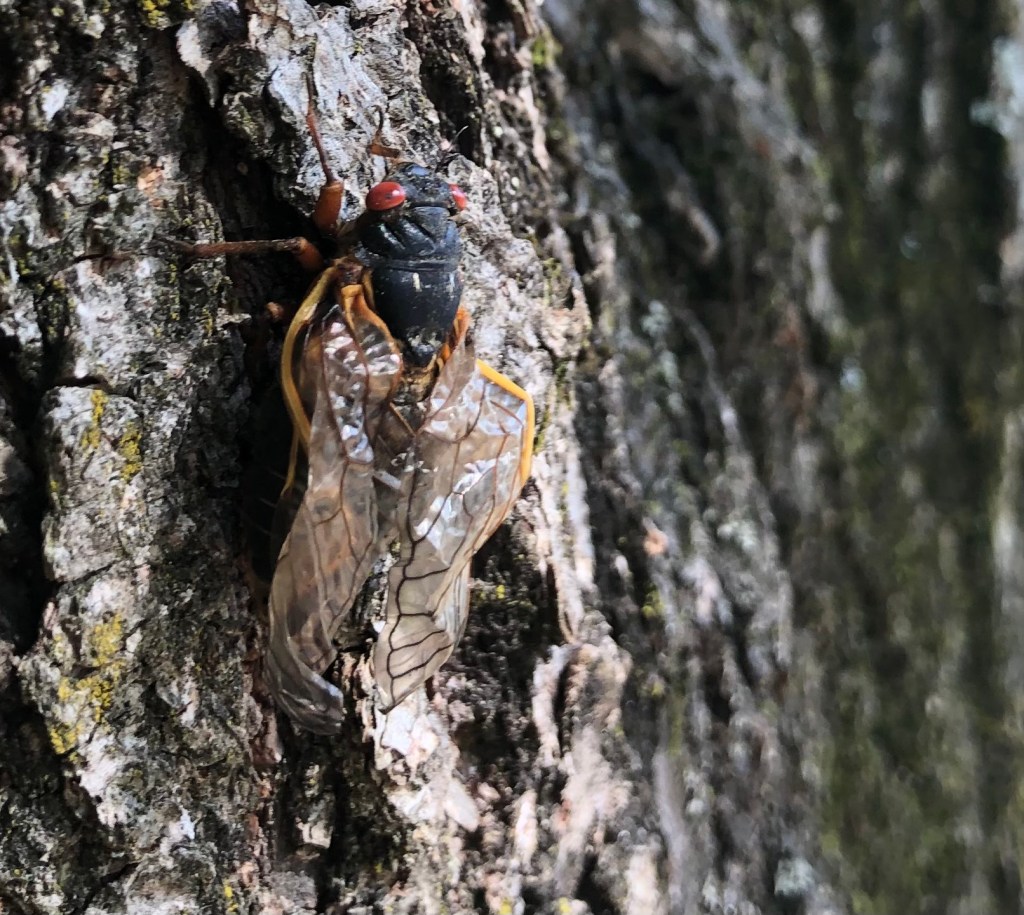
    Hopefully, I’ve grown more responsible. The Russian Blue we adopted this summer sits in my lap as I type this. I’m actually a great cat mom. And my track record with creatures of the wild notwithstanding, I still have an affinity with the outdoors. I love the Virginia outdoors in particular, with four distinct seasons that aren’t too much–especially this time of year before the summer heat burns off the fluorescent green. This year, as everyone is talking about, is the one of the cicada. Brood X. They haven’t quite taken over, yet, but we saw evidence of days to come by the oak in our front yard this morning. Discarded shells on the trunk, some with yellow newbies with black eyes still spilling out. Then my husband told me to look down at the grass and clover at my feet. Nymphs were crawling from the earth by the dozens; the dirt was literally bubbling like something out of a sci fi movie. This was a sight I had not remembered from the two other emergences I’ve seen in my lifetime. When we took our 19-year-old to the same tree later in the afternoon to show her, it was an entirely different scene. Still a gazillion shells on the tree. One or two clumps of yellow on the trunk, black eyed jelly oozing out to dry into flying bugs in the sun. But now the ground was still, and blanketed with death–torn wings, heads bitten off, all the ones who didn’t make it.

    The cicadas are the ultimate hermits. They stay on lockdown for seventeen years. Not the just under seventeen months we’ve been in the netherworld. Walking down to the farmer’s market today, I have yet to hear the laser whine of their mating call. That’s coming. What I saw in the square wasn’t a bunch of crawling bugs, lousy flyers who have to wait for their wings to dry. I saw people enjoying a gorgeous morning. Some masked, some not, they walked their dogs, chatted with their neighbors, bought snacks from the pretzel cart. Kids rode scooters, played hide-and-seek. It’s tulip and geranium season right now in Reston. Cue Chicago’s “Saturday in the Park.”

    It’s also graduation season. This year’s high school seniors were just learning to walk when Brood X was here last. I had already been teaching a decade. Our oldest was five, her baby sister two. This year, that oldest daughter started her own first teaching job with a class of fifth graders in Providence. Her baby sister spent most of the last eight months across the country in her first year of college. I am now the age my mother was when that first daughter was born.

    This year’s high school seniors were babies with Brood X was here last. I’ve seen the cicadas three times. So maybe I have something to offer these students in the way of knowledge? Life experience? This year, as with the last 27, they have much more to offer me. These students have spent the culmination of their public education in a netherworld we never imagined. They weren’t scheduled to burrow into the ground last March. The natural rhythm was disrupted. Or maybe reset. 

    Down at the farmer’s market today, I saw the appreciation of seasons I always have, but maybe it smelled just a little sweeter. A friend of mine told me she heard that the two years after Brood X are the most fertile. The way these creatures aerate the soil lets in water and light. The ones sacrificed to birds and chipmunks fertilize the earth and leave it prime for lushness in the months to come. 

    I can’t wait.

    This is a long post, but I’ll make it just a bit longer. Every year, my seniors write a final reflection they read aloud on the last day we are all together. My year is far from over. It’ll peter out, trickle down as students take SOLs, AP tests, do internships. It’s akin to waiting for the full throttle of Brood X. They don’t all emerge at once. So yesterday was the last day I knew I’d have my students all in hybrid person and Google Meet before they begin to fly off. They came in, some at their desks, others icons on the jumbotron in my classroom. They read, cheered each other on in the chat. I am always humbled by what they come up with. Even the ones who recycled college essays revised them, made them even more thoughtful. One student wrote his reflection entirely in Latin. (Okay, maybe a bit of intellectual flexing, as I teased him, but OMG a high school senior who can write in dactylic hexameter? These kids are CRAZY smart and talented) Students shared so much, trusted each other, and me, with honesty, wisdom, and the absolute best of their 18-year-old truth. And that’s some truth, let me tell you.

    As for me, I share a reflection of my own every year as well. This year, it was a hermit crab essay inspired by a workshop I attended last weekend. I’ll go ahead and post it here, in honor of the Broad Run High School Class of 2021. In honor of all seniors, really. Go fly.

    THIS IS YOUR CAPTAIN SPEAKING

    Hello, passengers on flight BRHS21. This is your captain, Ms. Toner, letting you know we are beginning our descent into high school graduation. Please return your tray tables and seats to their full and upright position in preparation for landing. OH WAIT, CRAP…Is this the first time I’ve come on the intercom? Did we forget to run the safety video? (murmuring in the cockpit)

    Honestly, it’s okay. I’ve always been the kind of person to read the last page first, and the truth is you’re always on your phones during the attendant’s demonstration anyway. Still, rules is rules with the FAA, so I am required by law to do the spiel. Here it goes:

    Welcome aboard LCPS flight BRHS21 with service from middle school to legal adulthood. Estimated travel time four years, though, at times, it may seem much much longer. Here are a few things about our aircraft and flight that we hope have made your trip as comfortable and enjoyable as possible.

    First, notice your seat belt—the courses, requirements, bell schedules, and routines meant to keep you safe and secure. These were easy to slip into. You simply lifted the top of an education system you were familiar with and inserted the buckle from the other side. This place seemed larger than you needed at first, so I’m sure you pulled the belt to tighten your situation comfortably across your lap. Luckily, it adjusted as you joined clubs, teams, the band, drama, color guard—as you met some of the 1400 passengers traveling with you. It didn’t take you long to realize some had different connections. Some were headed places you had no desire to visit. Some were the chatty kind whom you avoided by putting on your headphones. Others came on board with that stinky Chipotle you had to smell the entire flight. You still offered them gum to keep their ears from popping when you took off.

    When the pressure in the cabin dropped, oxygen masks fell from the ceiling. You had younger, less experienced passengers next to you as well. I know we didn’t need to tell you that you couldn’t help a soul unless you put on your own mask first. Or maybe you learned that the hard way. But you always had the best of intentions. And you know better now. Before anything else, you must breathe. Sometimes you must remind yourself to do just that.

    Please take note of the emergency exits to your right, left, and at the front and the rear of your high school career. You’ve been on other flights. You know the most difficult parts are the take-off and landing. And the slide you use in a crash landing may look fun, but you know that such shortcuts are more dangerous than they’re worth. You have learned to trust those who hold the instruments. Sometimes those people are actually you. Trust yourself to know what to do when there’s turbulence. Return to your seat, return to your people, buckle up, and hold hands. At that point, there’s only so much in your control. You know that too. 

    We are approaching our destination. You might feel a slight dip, tip to the right, a bump when the wheels engage and a bigger bump when they hit the ground. You might have flipped through the in-flight magazine that describes what’s in store when we land; trust me, the reality is never like the glossy pictures. Sometimes it’s worse. Sometimes it’s much much better. Thank you for showing consideration for the other passengers on this trip. Or if you didn’t, try to show a little more grace to the 300 pound nervous flyer with the super puffy jacket who crowds your armrest. You won’t be sorry. One thing you’ve already learned—some days, you’re the one asking for grace, both from yourself and others. I, your captain, have had to ask for plenty. I know I’ll be asking for, and hopefully giving, that grace on many flights to come. Thank you for choosing this AP class for your travel needs. I’ll miss you.

  • We are all grieving.

    I know that some of you, maybe many, will stop reading this post after the first sentence. I totally get it. There is only so much bandwidth available in an average soul for all that’s been bad about this year–all that’s been lost. I could commiserate with a list of the individual sadness and pain those I hold dearest have felt in 2020. But every one of us has our own list, and it’s not a contest. If you’re still reading, then rest assured that grief is only half of this story.

    “It’s okay to feel a little sad,” our oldest texted from five states away this morning. I appreciate the permission. I believe that’s the first thing to get out of the way. So many lights in the neighborhood, literally bursting at the seams with baked goods and carols and fa la la la la. I think we (and I keep using that collective pronoun) proclaimed sometime after Halloween that we were going to go all in with the holidays, tune to WASH FM 24 hr. Christmas music even earlier, be as festive as F–OR ELSE… After all, what else were we going to do, stuck in our houses, stuck in our heads, with a gaping hole in our hearts?

    “Quit your whining…count your blessings…know how lucky you are!” I can hear my grandmother telling me now. “Do something useful.” Yes, Meemaw, you’re right. Whining’s for chumps. I am healthy. I have a warm house, warm food, people (and a really sweet fat Russian Blue, thanks to some friends) to hug. But I’m a little sad. And Meemaw, your great granddaughter, a pretty smart cookie, just told me that’s okay. 

    I imagine that grief sits on one side of a shoji. The shoji is a wooden door with translucent paper in its frames. It is believed to have come to Japan from China during the seventh or eighth century. I think that on the other side of grief’s shoji sits joy. There isn’t an opaque wall that separates the two. We stand on either side at various times in our lives, but, if we look, we can make out the other. Then, the door slides open, and we step through, only certain that, at some point, we’ll come back again. There is pain, but, through the translucence (you can call it a “glass darkly,” if you want) there is happiness.

    And vice versa.

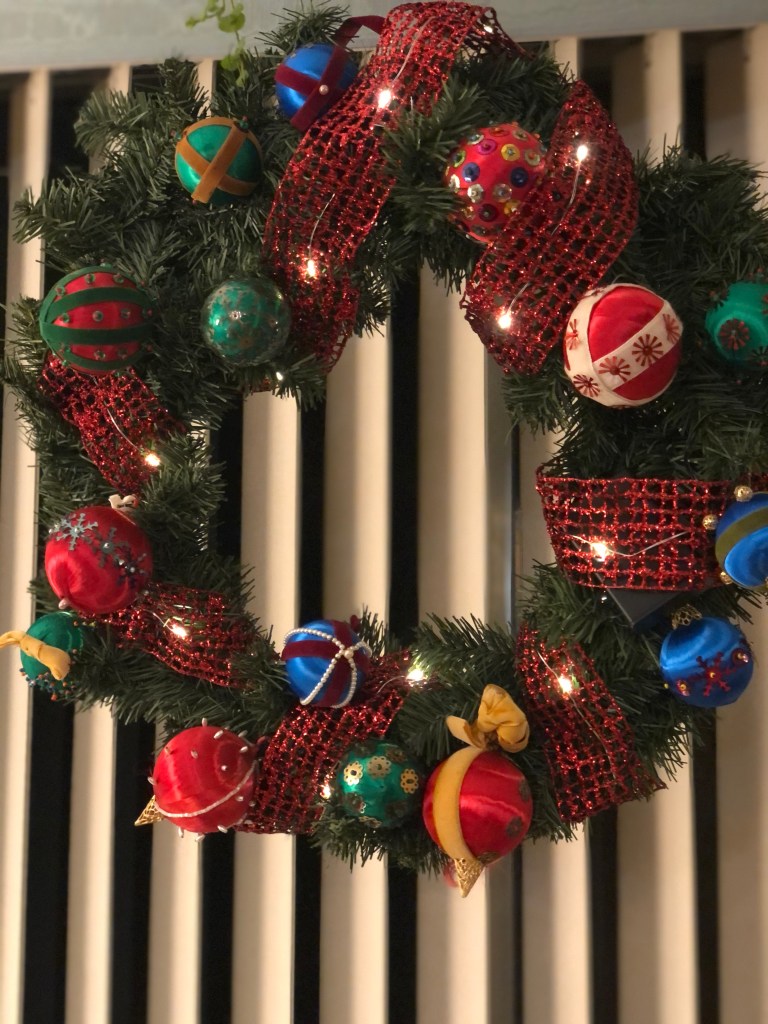
    A few days ago, I made a Christmas decoration. I got the idea from a dear friend’s Facebook Post. He just got married yesterday, to a love well deserved and long overdue. His mother took old holiday decorations from his childhood and attached them to a ring of green. So I did the same with a box of ornaments my own  mother gave me a few years back.

    I was thinking on our family Zoom tonight that I’d ask everyone for their earliest Christmas memories. Mine is actually the year Mom and I went with Dad up to Maryland to see his parents. They had two dogs, Sissy and Boy, a toy poodle and pomeranian mix respectively. There’s a picture of me smiling in a Christmas coat holding a doll in front of an antique MG (My uncle always was an autophile) with a giant stuffed Santa in the passenger seat. 

    It was, in fact, my first Christmas with Dad. See, he wasn’t my dad, yet. But he and Mom would marry, he’d adopt me, they’d have my sisters, and so many beautiful Christmases after that. So many beautiful Christmases to come.

    Back to the box of decorations and the wreath I made. The story goes that the first Christmas my mother and birth father were married, they lived on base and realized, when they bought a tree, that they had no ornaments. So they decided to throw a crafting party to make some. There were styrofoam balls covered in satin, bejewels before bejewels were cool. Quite a bit of Johnny Walker, I imagine.

    Every year, I enjoyed putting the cockeyed ornaments on our tree, and Mom decided a few years back it was my turn to have them. This year, with a smaller tree of our own, I decided that they needed a more individual and permanent showcase. So the wreath idea was perfect. It hangs in our den as I write this, and I can’t help but consider the fun they had at that party. Mom would have one more Christmas with my father. I would have none. He was killed in an F4 when I was four months old.

    I don’t tell that story to make anyone sad. Although, remember, it’s okay to be. I tell that story because I  can imagine the joy the two of them felt during their last Christmas together, expecting their first child. And I can imagine that the Christmas of 1970, when it was just my mother and me, she never imagined the joy to come. Or maybe she did.

    Shoji.

    Here’s where I’m going to get a bit Biblical. I don’t consider myself a particularly religious person. But I’d like to think I am a person of faith, and my Catholic school upbringing equipped me with a working knowledge of scripture. As a writer, the pauses in the Gospel are what have always stuck with me–the moments of quiet, reflection, and yes, sometimes grief. One of those pauses comes in the Christmas story itself:

    From Luke 2, Verses 17-18

    When they had seen him, they spread the word concerning what had been told them about this child, and all who heard it were amazed at what the shepherds said to them. But Mary treasured up all these things and pondered them in her heart.

    What was she thinking, I always wondered. It occurs to me she wasn’t just caught in the brilliance of the moment, the joy of holding her son for the first time. If Mary listened to the angel, if she had the line in on the grand plan, then she knew, from that first moment, how the story would go. She knew even then that she would have to bury her son. There is no greater grief than that.

    It also wasn’t the end of the story.

    Shoji.

    My wish for the world tonight is vision through that pane of paper. May we give each other grace, comfort, and love today and always. I’ll end with the final verse of one of my favorite carols, (I’ll take some liberties with the pronouns and address it to y’all.) It’s by Christina Rossetti. I absolutely love the tune, but I remember the Christmas my piano teacher made me stop and read the last stanza. 

    “Isn’t that just beautiful?” she asked after I had.

    “Yes, it is.”

    From “In the Bleak Midwinter”

    What can I give you, poor as I am?

    If I were a shepherd, I would bring a lamb;

    If I were a Wise Man, I would do my part;

    Yet what I can I give you: give my heart.

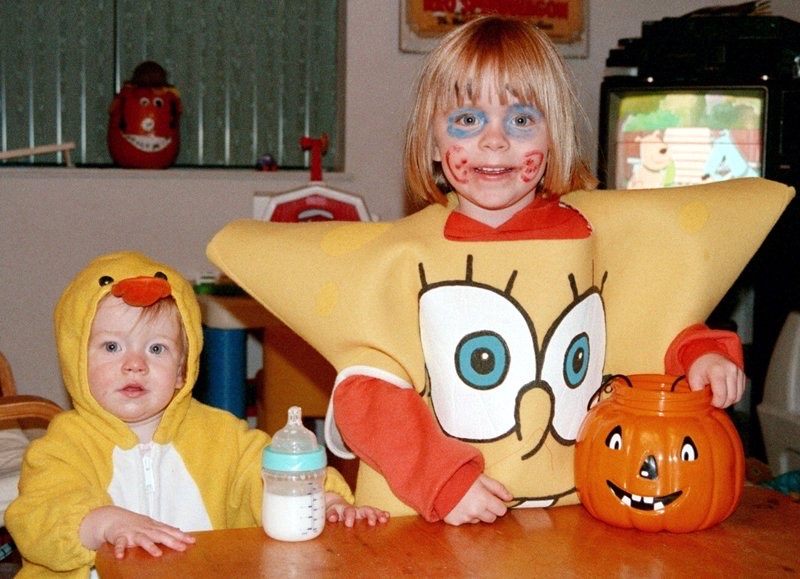
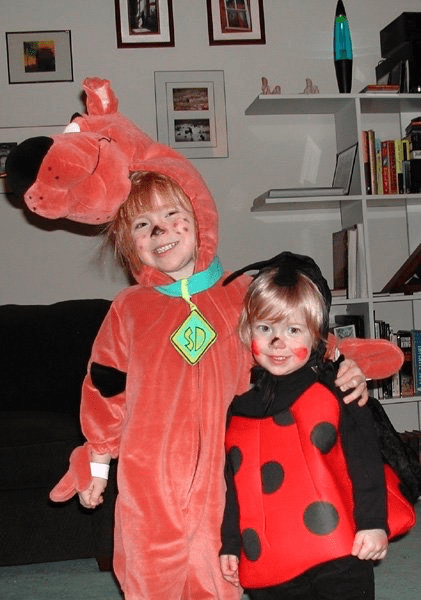
  • Mark sent a text to our family chat today with two old Halloween pictures. Our townhouse development is setting up candy tables in the carports with individually wrapped bars properly socially distanced. It’s a far cry from the days of these photos, where the children and parents of the cluster would gather at the playground and stack a table with cupcakes, cookies, cold cuts, before we all set out en masse from house to house. I have no doubt this new version will also be legendary–something kids from other neighborhoods travel to upon word of mouth, or, in this case, word of the keyboard. Still, it’s not the same. And neither are we, Mark and I. Officially empty nesters, we sit in a spookily quiet house, in our individual studies separated by three sets of stairs. The vertical nature of our home’s construction makes the distance wider. Once upon a time, it was just enough space for all four of us to go to our corners after a melt down. We craved the quiet. 

    When the girls were little, one source of Halloween stress was often the costume. Aimee, the planner, the visual and auditory artist, angsted over her decision. Our little Libra weighed the pros and cons with meticulous detail. “Do I wear the paleontologist field jacket? But then I’ll get my stuffed triceratops dirty. It’s supposed to be exactly 48 degrees at seven p.m.. That means I’ll have to wear a turtleneck underneath my Tinkerbell costume. That won’t look right. Wait, is it supposed to rain? Maybe I can wear a stuffed silver trash bag and go as a Hershey’s Kiss. That way, I can wear my windbreaker underneath with the hood…”

    Sara was an entirely different story. Just as much planning would go into the purchase and/or construction of her costume. But, invariably, she would change her mind about what she wanted to be on the morning of the 31st. Of course, we would have been the worst parents ever if we had told the other parents in the neighborhood, “No, at 8 a.m. before school, she’s going to dig through the 23 yr old costumes my little sisters gave me for dress up because that’s how she do…” That just wouldn’t fly. So every year, we went through the same routine. I kid you not, this started at just over ten months old when, in early October, she grabbed a duck costume (the one in picture A) off of the rack (yes, she was walking and talking at 10 months) and demanded that I put it on her. She toddled around the store for the next 20 minutes going, “KACK, KACK, DUCK, KACK, KACK. DUCK…” Like I said, she was already talking. So I called Mark on the cell and told him to pack away the pumpkin costume we had ready.

    Halloween also falls at the end of my teaching quarter. This year, as wacky as it has been, is no different. So I bid adieu to my five classes of icons Thursday and Friday anticipating the emails I always get over this weekend. “Ms. Toner, can I still turn in…Ms. Toner, is there anything I can do to…”

    I’ll be honest. My answer has usually been yes in past years, and, this year, it most definitely is. (Cue ten more emails from students who might be reading my blog…who am I kidding?) I have used the word “grace” a lot this year. Grace I’m giving my students. Grace I’m trying to give myself in adjusting to life in quarantine, life without children in the house, life having to teach this way. Grace I’m trying to give the man I love and live with. We’re navigating this normal that is new on so many levels as best we can. A baseball season, albeit short, helped. But then we remembered that, this time last year, we sat in the rain at Nats stadium and watched them take the Series. We stuffed our faces with fries to stay warm and danced in the streets. We went to a parade…a PARADE for Christ sake, downtown that Saturday. Cheered until we were hoarse.

    Again, grace. Patience with the quiet. 

    The flat circle that time has become has offered me another bit of personal reinvention. While I have loved to cook for my entire adult life, I’ll confess that baking always terrified me. First of all, I believed my mother, another cook more than baker, who always said that there is enough delicious bread to be purchased. The time and mess in doing it yourself isn’t worth it. Plus, I’m just not an exact person. I am NOT good at numbers, and I always assumed baking took a precision in that regard that just isn’t enjoyable to me.

    Then my daughter’s boyfriend baked some no knead dough in my Dutch oven, and the reinvention began. It was REALLY friggin’ good. It didn’t seem that difficult to do. So I tried the New York Times recipe. My pot already had the grease stains seared into it from a 450 degree oven, so why not?

    I tried the recipe, and I failed miserably. It was way too flat. It tasted okay, but it was more focaccia than boule. I didn’t understand. I followed the recipe to the letter. I knew the yeast was alive. What was going on?

    I started watching YouTube videos, and one of them had a piece of wisdom that changed my entire perspective. It was a tutorial on the no knead recipe, and the teacher was, first off, very reassuring. As he folded over his shaggy dough, scraping some of the flour cement from his fingers, manhandling the lump into a second bowl, he kept saying, “It’s going to be messy. And that’s okay. It’s going to get on your fingers. That’s okay too.” Then he said this: “Remember, baking is an art, not a science.”

    That’s when my approach changed completely. Yes, I understand that temperature, moisture, yeast rising, folding to strengthen the crumb, all of these components are important. I also know that they can be adjusted, corrected. If my dough is too wet, I add a little flour. If it’s too dry, another tablespoon of water. I stop to enjoy the smell of the yeast blooming in a glass measuring cup of warm water, and I NEVER open an oven while it’s baking. (Another piece of advice from another YouTube video). I lift the lid from the Dutch oven before those last fifteen minutes, and, as a cousin said in a Facebook comment, it’s like Christmas morning.

    I read some more recipes, watch some more videos. Find out how to take that rustic slow proofing recipe and create baguettes with a pizza stone and ice beneath it in a cast iron skillet. Then I find another recipe for biscuits. With vinegar, they can taste like buttermilk. 

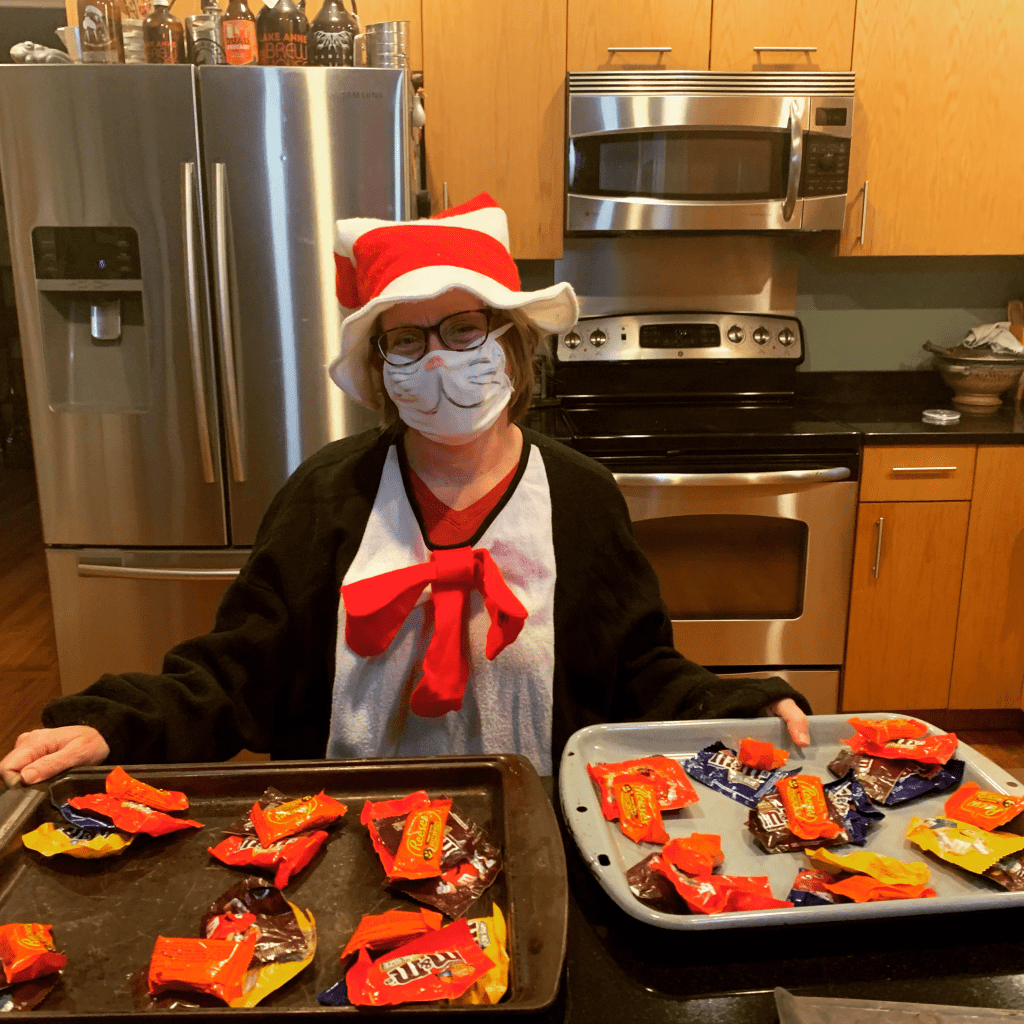
    I experiment, fail, then succeed. I give myself time, and grace, and the kitchen smells delicious. And, by the way, I pulled a Sara this year and decided on a costume at three p.m.. I took to my mask with markers, raided the coat closet, and traipsed around the neighborhood as a socially distanced Cat in the Hat. In the end, reinvention is an art, not a science. 

  • Blackbirds | Facts about Male & Female Blackbirds - The RSPB

    Yes, it’s been a while. I suppose I have felt, with all that has transpired in the past months, that I wanted to step back, read, listen, give other people a chance to speak. On my morning walk last week, though, I found myself in one of those situations where every song from my playlist spoke directly to me and the moment: A fantastic cover of “Three Little Birds,” (better known as “Every little thing is gonna be all right,” Gabe Dixon’s “When the Smoke Clears,” and then Sara Gazarek’s cover of “Blackbird.” Which brought me back to New Year’s. I’ll explain.

    It’s the beginning of the school year, albeit an unprecedented one. When I began writing this,  I was in my study hall now, typing at my dining room table. Kiddos were working, cameras off, mics muted for the moment. But one thing was the same as it’s always been: I was energized, exhausted, and feeling like New Year’s. September has always been New Year’s for me–a chance to reinvent myself as a student, as a teacher–new supplies. Yes, more Pilot V5 pens and notebooks and markers and glue, and rulers, and, and, and…(I’m a bit of a Target junkie…) a redecorated classroom…okay, that may be different this year, but we did get our bathrooms redone over the summer. Don’t worry, I’m not teaching from there. 

    Most of all, new classes. New people to get to know, to learn from, to grow with. It’s different this year. They are squares on a screen, some chatter in Google Meet Break-Out rooms (Thank God for those!). So much is lost–the din of the hallways, the underclassmen slamming into each other up and down the hallway, the smell from the cafeteria around noon.

    Okay, so maybe I don’t miss all of it. And it’s true you can’t beat the commute. Still, I so want to interact with them in person. I DO miss their chatter, my eavesdropping, which I think is one of the most fun aspects of teaching.

    What is not missing so far is their creativity, which I was thrilled to see in one of our first class activities. I often have students choose their own norms for how class will be conducted, a class list of “most important values,” and I decided this year, definitely, required their input like none other. So I began by showing a video about Austin’s Buttlerfly. You should watch it if you haven’t. A small group of elementary schoolers teaching us about revision. Various drafts of a butterfly. From the child’s scribble to a mouth dropping representation. These students offer constructive criticism. They celebrate the ultimate success. My favorite part of the video is when they all exclaim, when the teacher places the sixth draft on the easel, “Oh, my gosh, he is SOO good!

    My highschoolers laugh when I say, “You know, you encourage each other like that. Even now. I’ve seen it. Not always, but I’ve seen it. So that’s it, right? That works. Do more of it. There’s always something that works. So start by doing that.”

    I know, I know, it’s hard to see much that’s working today. The world, literally, is on fire. The weight of generations of Global Warming, centuries of systemic racism, a pandemic the likes of which we haven’t seen in 100 years, the 19th anniversary of the Twin Towers crumbling to the earth, and…and…and…

    We are all overwhelmed. I am overwhelmed. Not a lot of celebrating the empty nest here. I’m frightened for my own children in other states as infection rates tick up. I am frightened for the children I teach and my colleagues in our frustration over the challenges of distance learning. I am frightened for my country for so many reasons. I am frightened for my planet as well. 

    But there is always something that is working. I spent part of the afternoon with a colleague helping her pass out yearbooks and chatting about lesson plans. We greeted car after car, passed out what the students produced–gave a little creativity, the fruits of some hard labor last spring, to those who came by.

    I’ve been frightened before. But I’ve also seen what can lie on the other side. On the actual New Year’s going into 2018, I reflected on what had been a particularly difficult 365 days for me personally. I’m posting part of it here. It’s about the song “Blackbird.” Listen to it, if you get the chance. 

    https://www.google.com/search?q=blackbird&rlz=1C1GCEA_enUS798US798&oq=blackbird&aqs=chrome..69i57j69i60.3402j0j15&sourceid=chrome&ie=UTF-8&safe=active&surl=1

    And Happy New Year.

    From December 31, 2017:

    So I often post a song New Year’s Eve, and this one has kept coming up in 2017.  Actually, the first time I heard it, I was younger than my second born.  My friend David Meeks picked me up to take me to my first high school party after a day in Charlottesville at a journalism conference.  My parents let me go with this newly licensed sophomore, no questions asked.  But they knew David was a good egg.  I don’t remember much about the party, and no, it’s not because I misbehaved.  It’s because it was a pretty typical night, one like many others to come that would find me sitting around in someone’s basement watching TV, listening to music, looking ahead.  What I do remember is the song that David played on the way there—“Blackbird.” 

    “This is The Beatles, right?  I’ve never heard this album.”

    “That’s because you’ve just listened to their early stuff, FRESHMAN..” David laughed.  “This is The White Album.”

    “Well, it’s incredible,” I said, and we drove on.

    Over Christmas at my parents’ this year, my sister Jamie Huggins Policky was playing the song on the guitar, and my other sister KT Huggins Barous said, “You know, I will always associate this song with a year ago, and your diagnosis. I was listening to my music on a trip that week, and five versions of ‘Blackbird’ must have come up on my Spotify feed.  So I listened to every one.  It seemed appropriate.”  KT has always had a way of finding the perfect title, the perfect song, for any moment.  It’s a gift.

    Happy New Year.  It’s been one hell of a ride in 2017, but hey, we’re here, aren’t we?  And we’ll wear our crosses, our stars, our evil eyes on a chain, our prayer wheels, our Captain America shirts.  Sometimes all at the same time.  We’ll wrap our arms around each other, always, and sing “into the light of the dark black night.”

    We’ll never stop singing.  That’s the secret.

  • download (6)I’ve been struggling with my words for the past couple of weeks. My thoughts are encased in icy droplets of brain fog as I sift through multiple emails, CNN, and Twitter. I move to the Yoga mat or treadmill to breathe for a bit, and back again. It feels a little like being thrown into icy water, bobbing up and gasping for air.
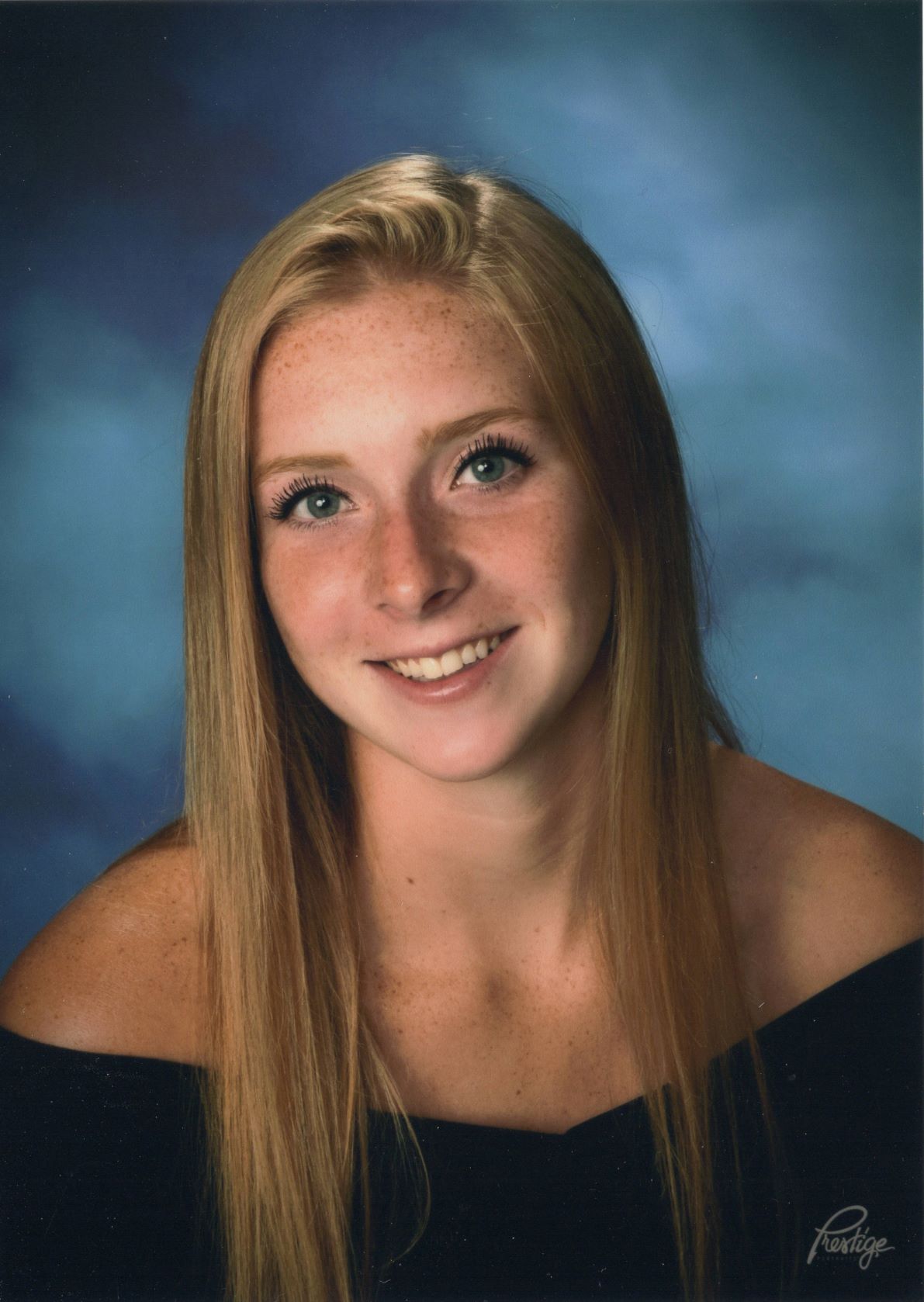
    saragradaimeegrad

    We are frozen.

    Loudoun County’s first day off from the Corona Pandemic was two weeks ago Thursday, and I opened an email that first morning that made me groan audibly. Mark looked up from his plate scrambled eggs.

    “It’s from one of my cancer survivor listservs,” I explained, “Saying that survivors have so much to offer during this time. That’s bullshit. I only have a modicum of wisdom to offer even other cancer patients. Every journey is different. No outcome is the same. And this is a global pandemic. Not the same thing AT ALL.”

    “Maybe not,” Mark said, thoughtfully. “But you know fear; you know uncertainty…”

    And I know something else, albeit on an entirely different scale.

    I know what it feels like to be frozen.

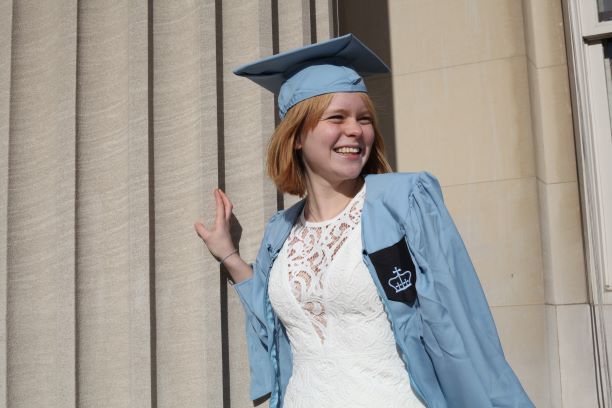
    I sat in front of my computer this morning, looking at the faces of three classes of AP seniors in a Zoom meeting. Our own high school senior was upstairs, just waking up, her senior lacrosse season decimated, prom and graduation in doubt, her social life, well, physically non-existent. Her father and I were supposed to be walking across the field with her on Senior Night at the end of April. Our older daughter is holed up in an apartment in Manhattan, going on runs wearing a surgical mask. She was supposed to play alto flute in the Columbia University Orchestra’s spring concert. I was supposed to be up in New York over spring break playing a duet with her in a senior recital.

    In the grand scheme of things, seen globally, we are so lucky. We are all healthy and safe. I have a sister who is a nurse taking shifts at U.V.A. Her concerns right now, on a daily basis, go far beyond graduations and virtual lesson plans. In the coming weeks, she will see up close, but I fear we all will see, this crisis in frightening perspective.

    But right now, my heart is breaking for my two seniors. My heart is breaking for the 50 seniors who were on my screen this morning.

    I decided to begin this first virtual class with an apology. I told them how sorry I was that they were robbed of this semester. I told them we were dealing with it in our own house as well.

    And then I explained my own experience with being frozen. When a doctor’s call stopped my life in its tracks. There were lots of figures, percentages, plans, but no certainty. And life wasn’t at all normal—for a while.

    In fact, what I told my students is that, if we live long enough, there will be a few times when we are frozen—when there is a before and an after. Traumatic, transformative events stop our lives in their tracks. In the midst of it, we wonder if things, if we, will ever be normal again. Then, when we come through on the other side, they are. But it’s a new normal. On the other side, we realize we have lost people, places, innocence, a part of ourselves.

    We also realize we have gained something. New people, new places, wisdom, strength we didn’t realize we had.

    This morning, running my fingers through my scraggly hair, I told my students that I could, if I tried, take myself back three years, to when I was weak, frightened, completely bald, wondering if that hair would ever grow back again. Looking at a timeline of nine months of chemo, surgery, radiation, wondering if it would ever end. Nine months seemed endless. Today, three weeks of social distancing seems impossible. This morning, I acknowledged living with uncertainty, realizing that we live our lives with the other shoe ready to drop.

    We are frozen, all of us at once, on a scale unprecedented. We pray for the thaw. It seems unattainable—a moving finish line. And then what, we ask? When will this horrible virus pop up again. Or another one, even?

    Okay, maybe I do know something about that feeling.

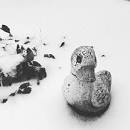
    Still, we’re here. We’re video conferencing, playing music, writing, hiking, watching dogwoods and forsythia explode around us. There’s this poem in my collection Anansi and Friends called “Snow Duck on the Ides.” I wrote it after a walk in the neighborhood three years ago this very time of year. I was probably at my sickest and couldn’t make it around the lake where I live. I think we walked a sixth of a mile in the March snow before I couldn’t take another step. My husband, in his typical patient fashion, said, “You don’t have to go any further,” and he helped me back home. But I remember how frustrated I was. How much I wanted to be able to take that stroll I love so much, all the way.

    We are frustrated. We are frightened. But we are also still here. And we have each other.

    Maybe that’s enough for now.

    Snow Duck on the Ides

    I see the stone creation, smaller than
    my neuropathic hand.  All thumbs, I stop
    and fumble a shot.  He’s pocked, throat slit by sleet
    and sun, but once upon a time his beak
    was bright, the yellow of daffodils that cry
    beside him.  They’re already dead, whether
    cased in glass from weather or man.
    The flowerpot man on the corner flashes
    with flags on the fourth of July—a Santa hat
    in December; when wind or rowdy kids
    destroy, they fix him to resemble human
    form again.  The duck is different; his grief
    is real, compounded and ignored, like poison
    in the veins until the statue, now
    a stranger to himself stares at me
    black spotted face reminding In a whisper
    of precipitation, “I’m still here.”

  • IMG-5485One thing is for sure. Ashburn ain’t Lake Minnetonka.
    But this week, I managed to purify myself with a little joy.

    There are a million odes written to Prince. I opened the latest poetry collection I bought just this morning and immediately turned to one. He will always be the most brilliant of musicians, the most amazing of performers, the most iconic of artists. That I never disputed. I’ve always said that there are two musicians who will make me move no matter where I am—Aretha Franklin and Prince. When he left us, I mourned the person, the talent lost, and I mourned the fact that I missed the chance to see him in concert. (Aretha I managed to see twice, both times with my daughters—something I will always treasure.)

    But I never saw Tom Petty. And I never saw Prince. My friend Anu, though, had the chance to see him four times: New York, San Francisco (same tour), D.C., and Vegas. So when my other dear friend Marianne said there was a watch party of Purple Rain at the Alamo on Monday, I knew immediately who to text. I wanted to see Prince through Anu’s eyes.

    I get it, being in the zone. There is this video of Prince that went viral shortly after his death. It’s footage of him after a sound check in Japan, and he’s sitting at the piano, taking a few minutes for himself at the instrument. Something like fifteen minutes of improvised jazz, quiet funk, reflection. Yes, he knew someone was recording him. Still, I’m convinced that at some point, he forgot and fell into the chords. I’m familiar with that look on his face. I’ve always said that some of my best playing is done when my Vose and Sons and I have alone time…just the two of us in the living room on Sunday just before lunch, working on a ballad or maybe just running through a progression of triads. That’s what Prince is doing (obviously at that sublime level only he could achieve). But those moments aren’t about skill. Those moments are about that smile, that calm—the, dare I say it, purity, of doing what you love.

    Anu loves Prince.

    The Alamo watch parties are super fun. There are props. This one had tambourines, glow sticks, blow up guitars. Anu was all about having the right glow stick for the right moment in the film. She inflated her guitar, and the lights went down. After a while, she was in the zone, mouthing the lyrics, pumping her arms, grinning wide, grinning that grin that spreads like a virus across the row.

    Granted, the film feeds right into the zone. Apollonia, “The Kid’s” love interest in the film, spends a good deal of time staring, gobsmacked by his artistry and his passion, viscerally paralyzed by the performance, the “zone” he puts her in. I found myself in that same place, having forgotten what a guitarist he was—that charisma that leaves us all unaware of the popcorn and the glow sticks.

    It was a party; we danced, we whooped, we yawped. What I enjoyed the most, though, was that smile on Anu’s face at points during the film. The same smile on Prince’s face in Japan. The same smile I feel on my own at the piano on a Sunday afternoon.

    I may not move like Prince (or Jagger, or anyone with any physical coordination, for that matter). I may not play like him (definitely not), but I know that smile. I know that joy.

    And it’s a blessing.

  • IMG_5405IMG_5406I spent the last morning of this decade organizing my study. I won’t say “cleaning out” because the ratio of what could have, or what should have been thrown away versus what actually was is…well…
    What should be thrown away is such a subjective term, right?

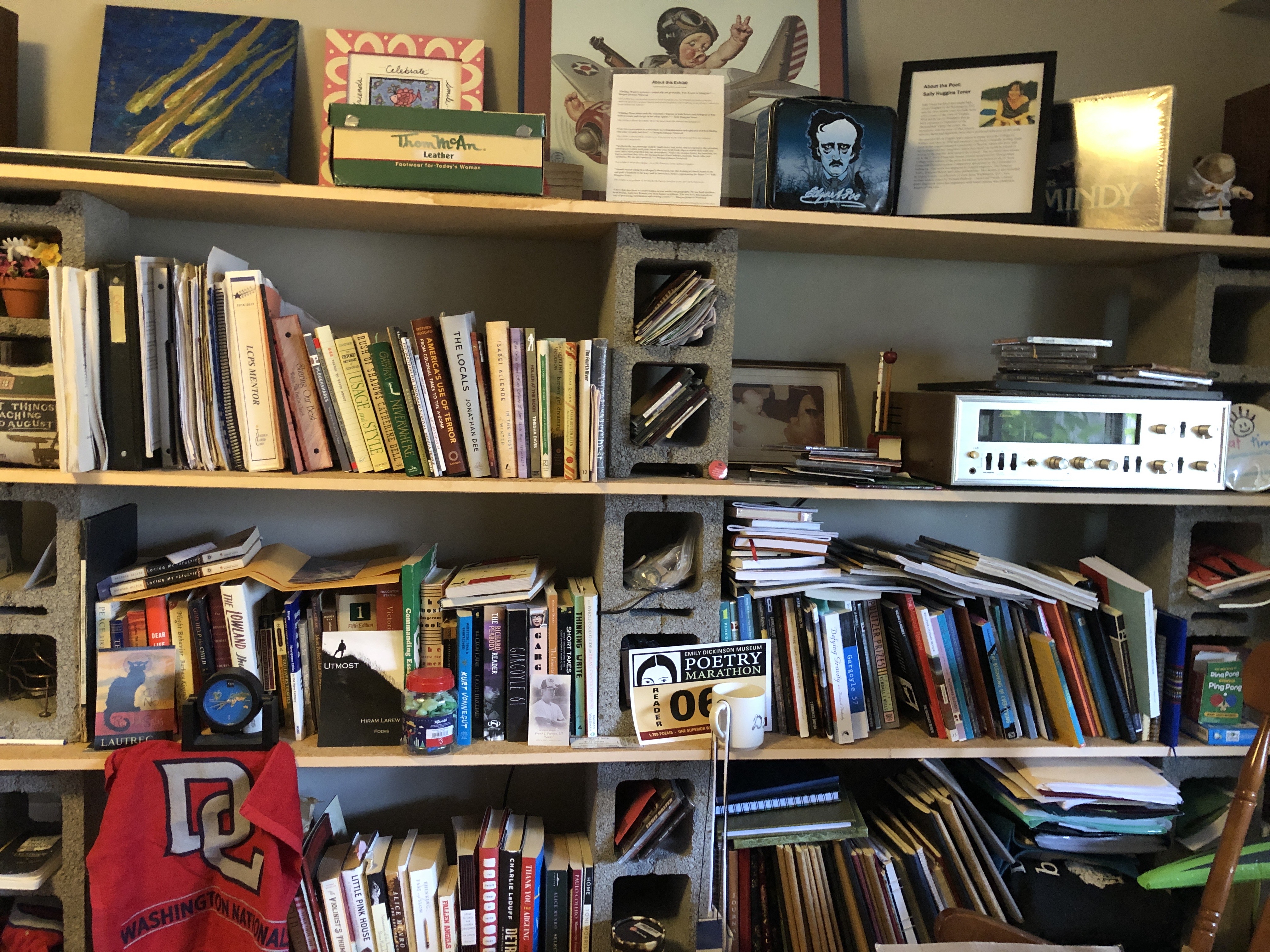
    I love my study and its clutter—my grandfather’s coffee cup, my Emily Dickinson Marathon badge, and my Washington Nationals towel cohabitating with school papers, journals, and books. There’s an Edgar Allan Poe lunch box on the top shelf, a Mork and Mindy board game and a kung fu hamster right next to it. There’s the baby in the fighter plane print that used to hang in our first born’s nursery (a gift from her Pop, the aviator). There’s the picture of me and my birth father I’ve posted before. There’s a Vietnam era stereo receiver that belonged to Mark’s dad. There’s a speaker with pins stuck in it, CNN, Kerry/Edwards, Obama/Biden, a “Believe, Achieve, Succeed” button celebrating Black History Month, a breast cancer ribbon…

    I think one of my favorite items is the oversized “What Time is Recess?” button on the second shelf.

    Why would I throw ANY of that away? The more I stare at that huge wall of shelves made of concrete and plywood, the more I understand that everything in them represents the five decades I have spent on this planet.

    The years provide.

    They provide people who come into our lives, some who stay and some who don’t. They provide opportunities for creativity. They provide times of illness and health in our minds and our bodies. They provide failure, which I maintain is one of time’s greatest commodities. We never grow from what goes right. Of course, we also don’t grow without love. The years provide that too, if we’re willing to accept it and give it back.

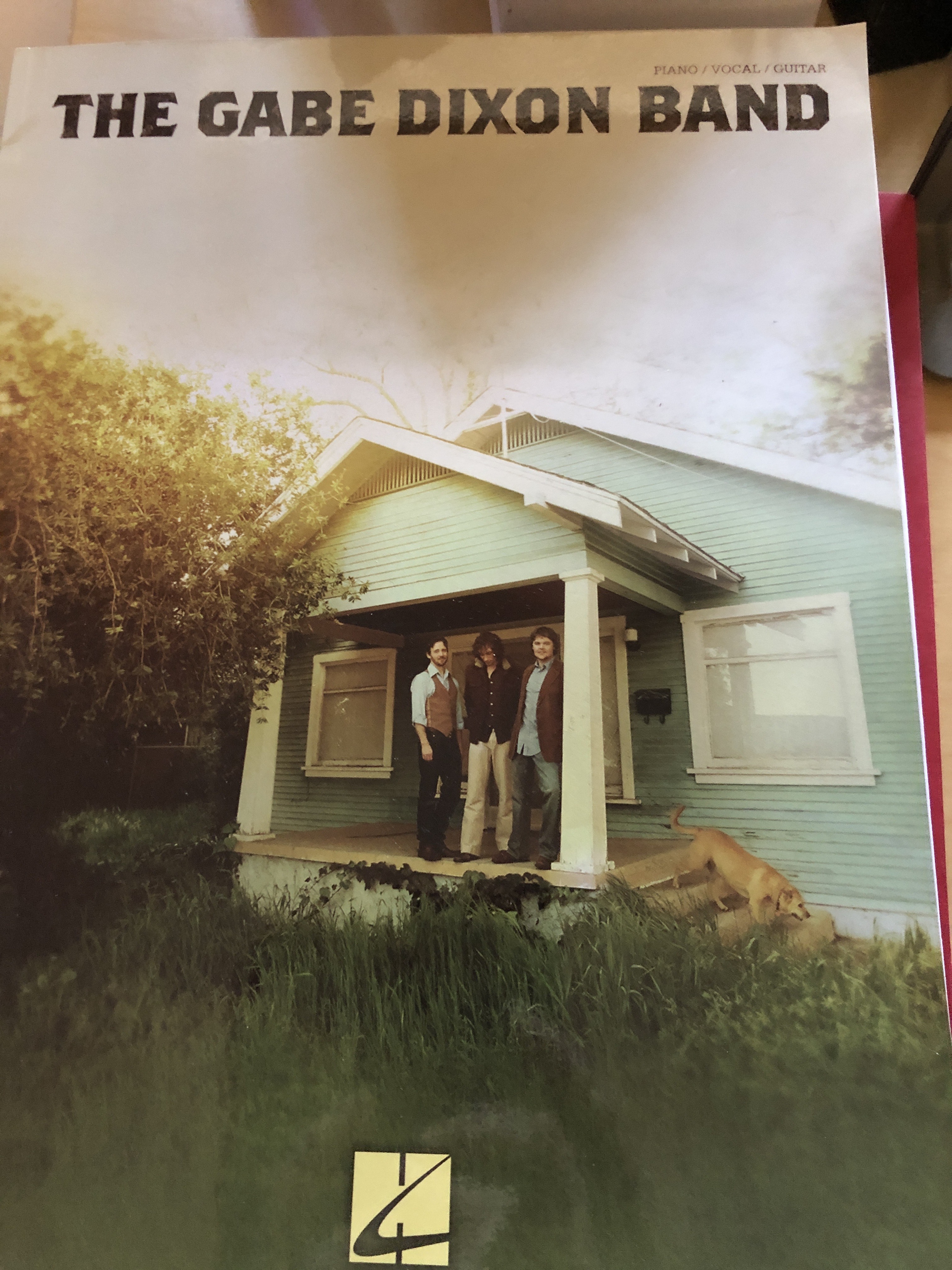
    In recent years, I have posted a song that is on my mind on the last night of the year. This year, the years, or the messy study, rather, provided. I found a book of music that is my assignment for the new year. A while back, our dear friend Marianne introduced me to the Gabe Dixon Band. There are so many things I remember about that concert at Jammin’ Java. For one thing, thanks to the connections of being a “plus one,” I got to check off my bucket list the item of touring an actual band’s tour bus. And guess what? I learned that rockers CAN have whole grain bread and Bach inventions tucked inside their traveling home. The other thing I remember about that night is that I heard the song “All Will Be Well” for the first time.

    “This song is like musical Prozac,” Marianne said when Gabe started to play. A couple of years later, she gave me a piano book from the album along with an original transcription of that song signed by Gabe himself. While I’ve always treasured it, my attempts at learning the piece have been less than successful. Simply put, my free time is limited, and the song is f-ing hard.

    But remember what I said about failure? In 2020, I’m going to learn that song.

    Few people would disagree when I say that we enter the new decade in anxious times. My 7:00 yoga class was chock full this morning. Money, politics, the environment, to name a few. The word that comes to mind is “unprecedented.”

    So little seems secure, right?

    That’s where another of life’s most precious commodities comes in—faith.

    Don’t get me wrong, I’m not talking about religion. Personally, I’ve always seen one as a language used to express the other. And I’ve seen true faith expressed in too many of those languages to pin it on just one. I’m talking about where we turn when we’re staring at a blank wall—when the empty spaces ahead swallow us or push us back into the dark places we’ve already passed through. That happens. We’re only human. And the decades past have provided fear. So will the ones ahead.

    But both also provide joy. A friend of mine, a talented writer and wise person, reminded me of that recently when I was preparing for a workshop I was giving on writing through trauma. As I was collecting excerpts to use as models, I found what seemed to be an endless supply of material.

    “I wonder sometimes if all writing is about trauma,” I said to her.

    “Not all of it,” she said. “Some of it is about joy.”

    Faith is what reminds us we’re not alone. It paints that blank wall with colors we couldn’t imagine ourselves. Faith in sorrow sows the seeds of joy.

    So my song this year, attached to this post, is Gabe Dixon’s “All Will Be Well.”

    Happy New Year, Happy New Decade.

    Listen to Gabe. Whatever happens, all will be well. We promise.

    All Will Be Well by Gabe Dixon

  • 'David'_by_Michelangelo_Fir_JBU013My friend Anna shared a meme on Thanksgiving that I can’t get out of my head.
    “Eat79342554_10162749019240080_8381826306769158144_o like no one is going to see you naked.”

    I’m almost 50. And pretty boring. And life is pretty hectic at Chez Toner. So I’d say that meme is a distinct possibility in the near future and a nice bit of permission. Though it got me thinking about the different definitions of naked and the necessity of exposure.

    There’s nekkid…you know, the original skinny dipping, streaking, locker room prancing, down to your birthday suit state. The state that brings up all the body image issues I’ve had since middle school. Except, when you get down to it, we all look pretty ridiculous without clothes. Isn’t that the story of Adam and Eve? When they realized the truth of their bodies…weren’t they…ashamed?

    Or did they laugh? More on laughter later. The other definition of naked is “armorless.” Vulnerable. That’s what I am considering during this holiday season. Being without clothing leaves us open to the elements. We chafe, we bruise, we burn. It’s a rough world out there. Why would we leave ourselves open to injury? It’s a valid question. What are the advantages to walking the world unprotected?

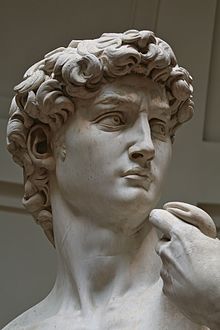
    I have seen the original Michelangelo’s David. I remember walking around the statue, looking at the proportion, the perfection in every muscle of his arms, his hands (okay, stop giggling. Again, I’ll talk about laughter later)—the perfection of everything.

    And then I cried.

    We all know the nakedness of that art isn’t real. Exposed skin, true vulnerability…it’s lumpy. It’s mottled. It’s far from perfect. That’s why it frightens us. That’s the challenge, as I see it, for this holiday season. To reveal a little more of our need. To be willing to listen to the needs of others. To be a little more naked.

    I’ll fess up to one of my number one classroom management strategies. It’s a behavioral pedagogy that comes from the heart. I walk in every day unafraid to be a goober. I was never the cool one as a teenager. At four-foot-ten, pudgy, having moved from across the state in the eighth grade, I never had the luxury of flying under the radar. So, when I began teaching, I decided to own it. I actually love school. I get excited about books and museums. I can’t dance. At all. In fact, I knock things over and trip. A lot. So my job in room 301, from day one, is to let my students know that I’m lame, so it’s okay for them to be too—on any given day, in any given way.

    In room 301, we all pledge to get better, together. We pledge to try. In the end, we share our weaknesses, fuss at ourselves, and move forward.

    In room 301, we also do something else. We laugh.

    Now for the part about laughter. After Thanksgiving, (after the eating), I was sitting alone at the dinner table with my father. We were having a conversation about my memories of childhood. There were things he remembered that I didn’t, and vice versa. What he thought was traumatic I only recalled as a secondhand story. When I recalled my first concrete memory, I had to remind him of the morning our cat Cricket came to live with us and which house we were in. Those differences in perspective are not surprising.

    There was, though, one thing we both remembered in the exact same way. The fact that we always laughed. A lot. I’m not talking about snark. Snark is humor with a dark underbelly. There’s usually a message, an agenda there. But when someone really laughs, it’s selfless. True laughter is, as I put it in a poem once, a gut chuckle. The kind that comes from the joy of someone’s company as you inhabit the same place. The kind that comes when we make fun of ourselves and realize that the someone in front of us loves us anyway.

    The kind that comes from being willing to see each other naked.

    My grandfather was the king of that kind of laughter. There was something about his complete lack of defensiveness—the way he came at us arms open wide with not an ounce of armor—that gave everyone else in his presence permission to do the same. He loved the holidays the most because he had a larger audience to help on that score. He’d walk into the house with the phrase and tone we all repeat to this day.

    Ho Ho Ho

    I know those three words belong to Santa, but our family gave them new meaning with a different inflection—a raised eyebrow and catch of guffaw in the back of the throat that acknowledged the horror in the world, what a mess we were. But what the hell. There is still always time to celebrate. Always time to enjoy each other.

    Always time to, “eat like no one is going to see you…”

    You know the rest.

    So Happy Holidays. Ho Ho Ho.

    And let’s all try to go a little more naked.

Design a site like this with WordPress.com
Get started