• Should old acquaintance be forgot,
    and never brought to mind?
    Should old acquaintance be forgot,

    and auld lang syne?

    It’s been exactly a year since my last post, but I promised myself I’d uphold the tradition of a New Years song offering with the most traditional…Yup…Auld Lang Syne

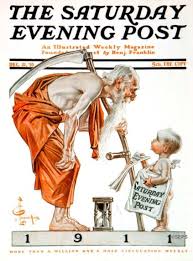
    The Scottish title translates to “long long ago,” and we sing it at the transition from one year to the next. The old man 2024 waddles out on his cane, and the bouncing baby 2025 dons his sash. On a micro and macro level, we’re staring forward with more than a little trepidation, which often has me reaching back “long long ago” for clarity and comfort.

    One of things I’ve always cherished about my husband is his approach to Christmas decorations. He’s worked from home for almost two decades, and, during that time, he begins decking the halls one little bit at a time from the first of December on. Every year, he moves something from its usual spot, and I take the switch up as a sweet surprise. This year, it was the ceramic nativity scene my mother painted when she was twelve. It used to sit on our black laqured spinnet when I was growing up, on top of a pile of cotton snow. I’d stare at it while I practiced Christmas carols, growing more excited the closer the holiday came. The creche’s new place is on top of the vanity on the landing with our first floor bathroom. No one who visits the house now can miss it. Neither did my mother, who spent the holiday with us this year. She mentioned it as she complemented my lasagna and tenderloin (both her recipes). 

    “And the nativity set. Where you put it. Just so dear.” 

    “That’s all Mark,” I corrected. Holiday spirit, at its best, is always a team effort.

    And we’ve had plenty of it in the past few weeks. Both girls home, games, music, laughter. I think that’s what I remember most about Christmas growing up. The laughter. As I grew older, I realized the blessing that was. There are so many who remember just the opposite this time of year.

    I’ve posted before about the holidays and grief. And this season holds that for our family as well. My mother-in-law is declining. We spent time at her house as well, giving her French champagne, a bite of Bouche de Noel. Flanked by her granddaugthers, she still managed to kick all of our asses in Gin Rummy. Another thing I cherish about my husband illuminated by witnessing the past six months–he is a phenomenal son.

    We are the sandwich generation. Once the house quiets from the exit of children, our own parents circle around again. Last night, I dreamed my mother-in-law was an infant again. I held her in my arms, swaddled, and she had the same elegant 88-year-old face but a tiny body. (Remarkable, as I never perfected the baby burrito with our own children, but it was a dream, after all.) Some real Benjamin Button shit. Though it occured to me this morning that Fitzgerald didn’t live past 40. How did he know what growing old meant? His imagination aged his soul, perhaps, to that point of wisdom. 

    There is much ahead and much that will be behind for us in the new year. I’m past wishing the days away, saying things like, “Hey, 2024, don’t let the door hit you in the ass on the way out.” We should have compassion for that old man hobbling off. We know him. We fought with him, were grateful for his care of us sometimes, just as we acknowledge his abuse in other instances. We have watched his face age over the past twelve months, laugh lines forming in the corners of his eyes, redness in their whites when he grew angry or sad. Sometimes we didn’t understand him, and there were multiple questions he never answered. But he helped make us who we are as we welcome that innocent babe into the world at midnight, wailing and laughing at the same time.

    We two have run about the hills,
    and picked the daisies fine;
    But we’ve wandered many a weary foot,
    since auld lang syne.

    I wish a cup of kindness so fiercely tonight, on a macro and micro level. Wish comfort, peace so fiercely tonight, on a macro and micro level. Wish renewal and exciting adventures so fiercely tonight, on a macro and micro level.

    I sit on my mother-in-law’s couch typing this, sandwiched between a past I revere and mourn and a future I view with excitement and fear. And in this moment, I’m grateful for how okay I am with that. 

    And there’s a hand my trusty friend!
    And give me a hand o’ thine!
    And we’ll take a right good-will draught,
    for auld lang syne.

    Happy New Year, my friends.
  • Grinch

    If I begin by telling you that this year’s song for the New Year is “Three Little Birds,” and that earworm, “Every little thing’s…gonna be alright” immediately pops into your head, you might say,

    Take your Pollyanna ass self and get the f#$k away from me…and we’ll no longer be friends. 

    Totally valid. Yes, I have been paying attention. The world is literally on fire. I’m getting a graduate degree in journalism, and, most mornings, I can’t bear to turn on the news. Misery abounds, and here I sit in my comfortable study in my comfortable townhouse, rested, well-fed. How dare I say not to worry? But, if you’ve read this far, I’m asking you to hear me out. 

    Hear me out–the introduction to a line of reasoning. I’ve been focusing on that this year, helping my students to walk their audience through an argument to support a logical claim. For the 30+ years I’ve been teaching writing, I’ve always struggled with this lesson, and, the older I get and the less anything seems to make any sense in the world around me, it hasn’t gotten any easier. Still, I’ll try to walk you through  my choice of songs and earn that, as they say in AP speak, sophistication point.

    What draws me to “Three Little Birds” this year is not necessarily “my message to you…” as Marley sings. It’s the title. Different stories exist about how he came up with it, but I’ll choose the literal meaning. I’ll Imagine the singing bits of nature on my doorstep. And I’ll make them cardinals.

    Cardinals are the state bird of Virginia. They abound in Reston and on our deck and right outside of our kitchen window, thanks to my husband’s attention to our feeders. They are my mother’s favorite bird, maybe her favorite animal altogether. So I grew up with them represented in art, knick knacks, crocheted on pillows, throws, all over our house.

    In my adult life, I learned that they also symbolize communication from the departed–messages from our ancestors. So I’ve spent a lot of time in recent years looking for them on my morning walks, summoning various people I’ve lost, looking for answers to questions I wish I’d asked while I could. We rarely ask the right ones when we have the chance, do we? I’ve been thinking a great deal this holiday season about my mother’s parents. Anyone who knows me won’t find that surprising. The end of the year, Christmas, then New Year’s Eve–these were the times growing up I always spent with them, even after they moved four states away when I was seven.

    Before then, it was every weekend. A friend posted on Facebook the other day a reel where a young dad talks about grandparents getting, “soft,” because they watch the latest toddler shows on Disney+ instead of making their grandkids sit through the marathons of Matlock they’d be watching anyway. I put this memory in a comment:

    My lineup—The Carol Burnett Show, All in the Family, The Jeffersons all on my Popa’s lap eating Kraft Singles and drinking Coca Cola. I can still hear his giggle. (Aimee has his giggle) Then the opening to The Rockford Files (answering machine I think) when I snuck into his and Meemaw’s bed later in the night. Unlike my parents, they’d let me stay. Safest place I’ve ever been. ❤️

    I’ve been considering that ever since–the safety I felt, the safety I know we all want to feel. That memory holds other things–my grandmother’s silk pillows, her arms wrapped around me, Popa’s snore–how I’d find the cigarette hole in their sheet. I didn’t understand then that it came from another time they’d been super dangerous and smoked in bed. I’d stick my finger in it, wind the cloth around my hand. Listen to the sound of James Garner’s voice as we three drifted off. Today, looking out of my window on this gray January afternoon, I can’t have any of those things in real time anymore.

    But I can seek out the cardinals. 

    When I’m anxious, when I’m sad, I can remember I’m loved greatly, capable of great love for others, thanks to my grandparents and so many others. My mom says, whenever I talk about how safe Meemaw and Popa made me feel, it guts her, since she knows Meemaw rarely felt safe herself growing up. Still, there must have been someone who did for her what she did for me. Close as I can tell from family lore, probably her mother. My great grandmother’s name was Sara, something I didn’t know until Mark and I had chosen a name we’d never considered for our second child for reasons we couldn’t explain.

    Three little birds?

    I wish you all peace in the New Year. Knowledge that you are loved greatly and capable of great love for others. I wish for you conversations with your younger selves in those moments when you feel anxious and sad. I wish for your ancestors to wrap their arms around you, which might not give the answers you need, but you’ll be able to drift off, warm, feeling clearer in the morning.

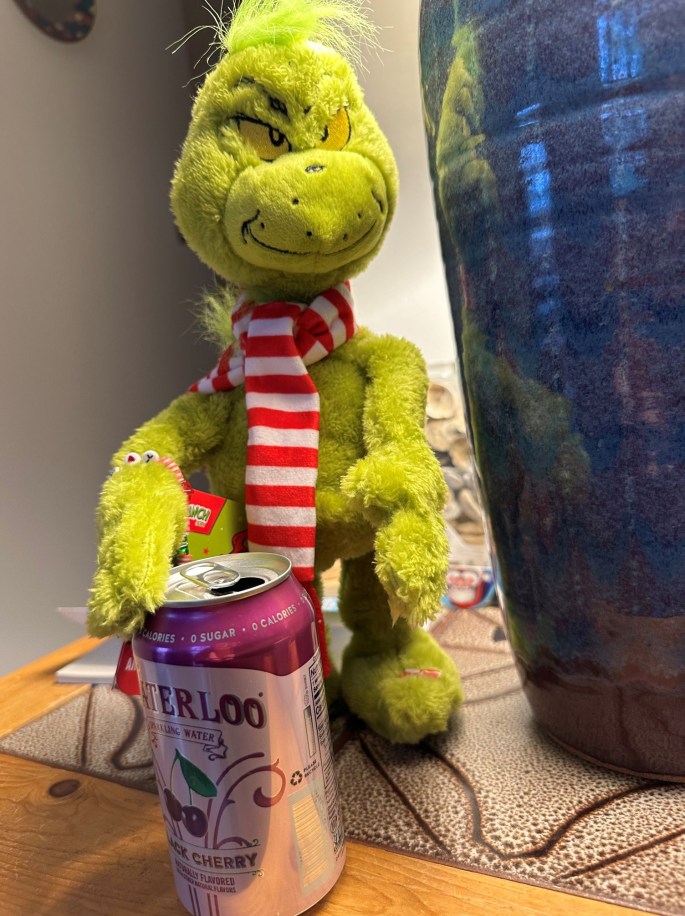
    And finally, I’ll leave you with a picture of my friend Grinch rehydrating. He had a night last night and just told me to take my Pollyanna ass self and f#$k off.

  • What is joy?

    A dear friend posted the question last evening, and today is the perfect day for me to weigh in–given the answer involves fathers.

    I have often said, when you lose a parent young, you gain, if you’re lucky, several more. I’m one of the lucky ones. I could go on and on (and have) about the father Jim Huggins has been to me–all the love and support I have felt all my life from amazing men–the incredible dad Mark is to our girls.

    But Anna’s question brought me to the first father I ever knew, and a reframing of the question.

    Instead of “What is joy?” I’m going to answer the question “Who is joy?” And I’m going to talk about my grandfather.

    My mother says that Father’s Day was the first time I realized what separated me from most of my classmates. We were making cards for dads in preschool, and, for some reason, that didn’t compute. The story goes I went home, asked my mom who my dad was, and that’s when she brought out pictures and explained that I did have a father who loved me very much, but he had died when I was a baby. Happy to have an answer, I gleefully explained to the teacher and the entire class the next day, “Guess what, I DO have a daddy! He just died in an F4, but I promise he loved me very much!” 

    Then I made a Father’s Day card for Popa. 

    That’s the name I gave my mom’s dad, David Ashley Tompkins, since I couldn’t say “Popsie,” which is what my older cousin called him. He was, in every way, my father. (I would find out later that this is the first thing he said to my grandmother when they found out my father had been killed. “Well, I’m her Daddy now.”) When my mother remarried, and I gained the most amazing dad, Popa gladly shared that responsibility. Joyfully, I should say, as he adored Jim Huggins.

    Joyfully–the way he did everything.

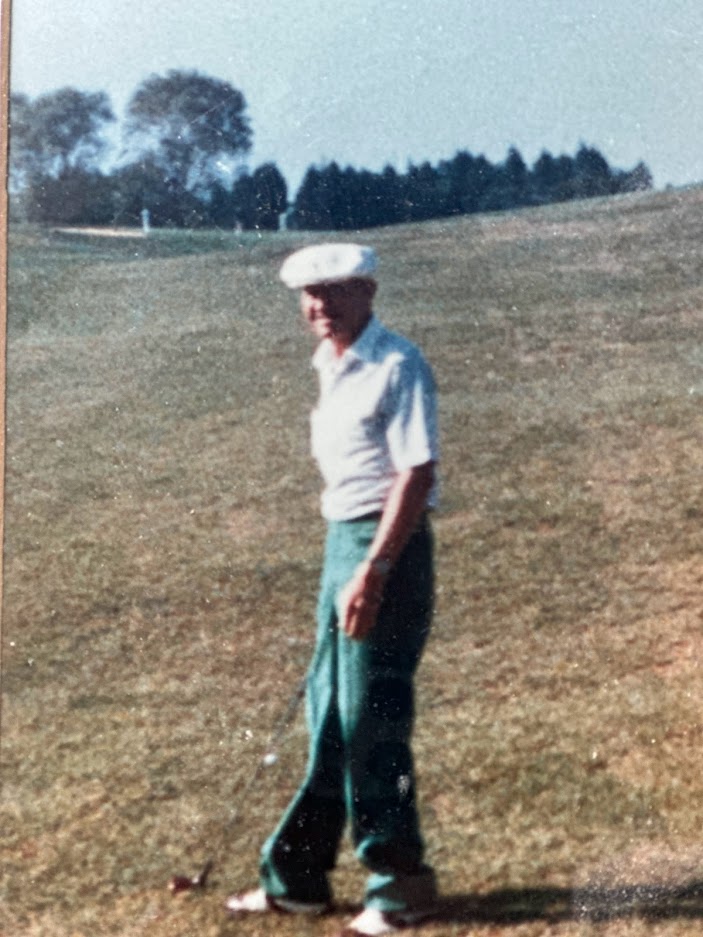
    Another thing I often say–there is that person in every generation with the contagious laugh. In our family, it’s my older daughter Aimee. From the time she first giggled, from the back of her throat, a resonant chuckle that no one can resist, I recognized it. Popa had that same laugh. A giggle, almost, that erupted into a full mouthed hiss and shaking of the body the funnier the joke (often his own) got. It didn’t matter what it was, either–a dirty limerick or a Saturday morning cartoon episode with me on his lap. He effused over everything from a well-done t-bone with just the right amount of pepper to someone else’s hole-in-one (or his own) to a seagull paperweight I gave him for Christmas one year. Joy.

    In her post about joy, Anna mulled over whether it’s also a lack of self consciousness. That may be, but I also think it’s an abandonment of fear–fear of the swing.

    Popa was an avid golfer. He learned the perfect swing as a young caddie, a lefty searching for someone else’s balls in the rough. He’d brush the vegetation aside, smoothing out his approach, over and over, and he learned early to keep his head down as he did. 

    He tried to teach me as well, with a seven iron and the crab apples in my parents’ backyard. He explained there’s a rhythm to everything, to treat the club like a pendulum.To keep it smooth and realize it should move forward as far as you pull it back.

    We can look at grief and joy as two sides of a coin that a lifetime flips over and over. But that makes these states two separate spaces we inhabit. 

    The more accurate view is that we move through grief to joy and back again on a pendulum. The middle might be a lull, a rut, or a period of contentment. We putt delicately, scared to overshoot and miss the hole.We know, when we haul off and let her rip, there will be highs, and lows, we can’t always anticipate or control. 

    To feel joy, we must accept the backswing. I don’t remember too many of those with Popa, but I recall a few–loss, disappointment in others, in himself. I remember Meemaw, my grandmother, whose fierce love girded him through those low points and helped him sway to the other side. He gave us permission to bogey, and he was the best cheerleader when we made it onto the green. He taught me joy. He taught a lot of people joy. We were the lucky ones.

    So happy Father’s Day, y’all. Don’t be afraid of the swing. I learned mine from someone who was joy. Not a bad example. Not a bad one at all.

  • It’s been a minute since a blog post; graduate work and teaching have kept me hopping. And the school year ain’t over yet. But the seniors are finishing up this week, the trees have that fluorescent hue that’ll blind me until the haze sets in mid summer. My pale pink rose bush is late blooming. They cut her back a little too far; still, I’ve noticed the tiny green buds that’ll explode in fragrance during the next month. I love late spring in Virginia.  

    It’s also time to write my senior farewell. It’s a tradition to have them spend the last day sitting in a circle in a read-around. They write reflections based on the theme of one of the first things they read in high school–The Odyssey–the journey, the wanderer–some “road” they’ve traveled over the past four years.

    We’ve discussed in my nonfiction program at Georgia the word “journey” and how much many writers hate it. It’s vague, like the adjective “interesting.” Of course, there’s also some latitude that lives in language open to many interpretations. I tell students I don’t want their reflections to be graduation speeches. No platitudes. I want a specific memory–a specific story of growth, or regression, victory, failure (which is its own victory, but I guess that’s a platitude too). They can share any part of what they’ve written in our final read-around. Then, when everyone has had a turn, I read my message to them. My own thoughts about this year’s “trip.” 

    I found this year’s reflection especially tough. I’ve been writing a ton for other people, and, at first, I thought it might be that my creative energies were tapped. I’m tired. We all are. I’m feeling much less clever and pithy than I usually do in May–which is to say I don’t usually feel that clever and pithy at all. This time of year, I’m wrapping things up and, yes, counting the days. I sometimes even wish them away.

    That’s when it hit me–my message to the class of 2023. Remember when we all felt so bad for that class of 2020 robbed of so much? I posted about that way back then. It has occurred to me on several occasions this year that this class has had the most of its high school career impacted by that event which shall remain nameless right now. (No, I didn’t want to write about THAT AGAIN.) They read their first Shakespeare, Romeo and Juliet online–if they did at all. Their sophomore slump was virtual. They came in as juniors with everyone expecting them to be leaders when they had no clue what high school was even about. So now, the class of 2023? They’re leaving this strange trip that Broad Run has been with their own list of, here’s that word we’ve heard way too often, unprecedented experiences. 

    And they are counting the days, sometimes even wishing them away, as high school seniors always have. 

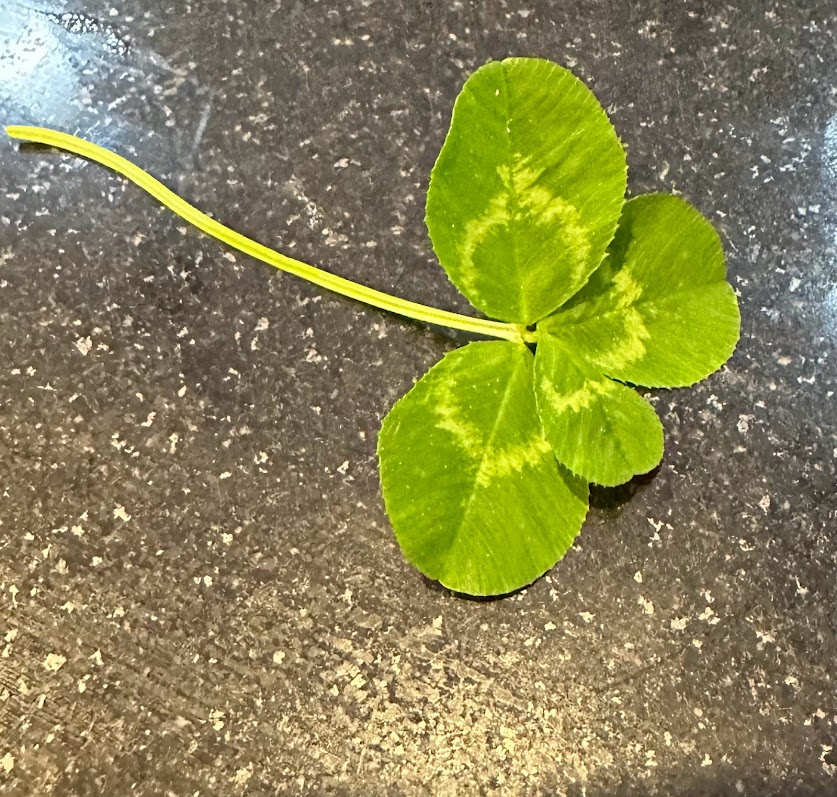
    I’m including a picture of a four-leaf clover I found this morning–my first of this season. It’s a little deformed, one leaf smaller than all the others. That somehow fits the class of 2023. A colleague of mine gives four-leaf clovers to her seniors every year along with a personalized message for each student. I’m not that prolific, but here’s my message to all of them. On June 1, I will watch my 30th class get their diplomas. I was only a little older than they are now when I started teaching. And this year, as with every other, I’m humbled and amazed by their thoughtfulness, their resilience, and what they continue to teach me. 

    To the Class of 2023,

    Don’t ever wish the days away. It’s something my boss, your principal, said in a department meeting a few years ago. Y’all are super lucky. We all are here at BR. We have a wise man at the helm. One thing I’ve learned in the half-a-century plus I’ve been on this planet. When someone wise says something smart, write it down. In her book Bird by Bird, Annie Lamott says we should put all that meaningful dialogue on index cards to use in our work. That’s writing advice. I also think it might be human advice. 

    As for 2022-23, I won’t lie. We didn’t get our snow days. I’m as relieved about the early graduation date as you are. We crave a break…but…

    I went through some photos today of my first year in the classroom. We had 17 snow days that year but not a break between March 1st and June 17th. We even went on a Saturday to make up for lost time. I taught a lesson on comic strips. Oh yes, people read newspapers then. My first year of teaching ended in 1994. Many of your parents were in high school or maybe just starting college. Billboard’s top song of the year was All4One’s “I Swear.” Ask them. They might remember it. Back then, they wished the days away like you are now. When they were little children, they wished the days away just like you did way back when–endless waits for Christmas presents, birthdays. Remember when the winter, the cold, seemed to last an eternity? Everyone just wants the diving board, the ice cream truck. We know we’ll hear its Ragtime bells every 45 minutes, during break. Sitting on the edge of the pool for fifteen minutes? That seems like forever too.

    What I promise–minutes will become decades. I promise something else. There’s always something to look forward to, if you choose that. Oh, what do I know? Maybe a little more than you, a little less than your grandmother. 

    Make that a lot less than your grandmother.

    Minutes become decades. Every year provides an opportunity to learn exponentially. 

    So do that. 

    30 years ago I began learning from students. I sit here today grateful for that. Grateful for you. 

    To quote Vonnegut, and I so apologize for shortchanging you with him, but please read this author again. You’ll be glad you did:

    He wrote, “And I urge you to please notice when you are happy, and exclaim or murmur or think at some point, ‘If this isn’t nice, I don’t know what is.”

    Isn’t this nice? Right now. Us. Right here. Let’s soak that in for a second–before the minutes become decades. Because I promise, they will.

  • That can’t be right, that I’ve had one blog post in 2022. Well, here’s one more to introduce the new year and offer up my annual song.

    It’s not a happy song. In fact, it’s been described as a contemplation of war, depression, isolation–not happy things. But it has whistling! There’s a story behind that too.

    Otis Redding contemplated a fourth verse to “Sittin’ on the Dock of the Bay” but hadn’t come up with the lyrics yet. So he whistled a filler, planning to get back into the studio to record the rest after his tour. Then he died in a plane on December 10, 1967, crashing  into the icy waters of Lake Monona. A grief stricken Steve Cropper decided to keep the whistle and add in the sounds of waves and seagulls before releasing the first ever posthumous single to top the charts in the U.S. 

    Wikipedia music history lesson over. Why did I choose this song to play out 2022? It keeps coming up this week in my reading, anniversaries–an earworm I need to play, write about before I switch tracks in the never ending playlist that loops through my head. 

    Let’s start with my reading. The song is described, its layers of sadness explained, in an incredible essay by Beth Ann Fennelly in her collection Heating & Cooling: 53 Micro Memoirs. She muses on the recording, “You can almost see them at Stax, shutting down the four-track, the console, killing the lights, We’ll finish ‘er up on Monday.” I read her book for a low residency program in narrative nonfiction I began this year at the University of Georgia. In 2022, I decided I wasn’t going to wait to “finish ‘er up.” The time to begin this program, and the project it entails, is now. 

    There’s something else about Otis Redding. January 4 will be the 31st anniversary of Mark’s and my first date. We had actually gone to a football game, a movie, and a formal together before that night, but we chose the date because it was the night the two of us fell in love. No, no gauzy camera panning, not like that. Just talking. Until two in the morning. One of those talks. A couple of beers and, yes, Otis Redding on my parents’ turn table. To this day, I cannot listen to him without falling in love with Mark once again. That’s a good thing. 

    But here’s the thing about anniversaries. They aren’t all good. January 4, 25 years later, would also be the night my doctor called with an official diagnosis of triple negative breast cancer. In the six years since, I have chosen to keep celebrating this day–as a birthday of sorts–a rebirth, if you will. Six years later, I am healthy, cancer free, peeling shrimp for New Year’s dinner listening to Beyonce’s, yup, Renaissance.

    Not all anniversaries are good. And not all New Years are either. There is loneliness, regret, grief we carry with us as the ball drops. Still, I’d be a fool not to be grateful. To wait to “finish ‘er up.” I am fully aware that I don’t know how many more ball drops I, or anyone else, will see. I will spend time with those who lift me up, lifting them up in return. I’ll do the best I can for others while doing the best I can to take care of myself. I’ll make a joyful noise–read, write, and teach with my outside voice. But I’ll also remember the value of a song that mulls–the seagulls, the waves, the whistle. There’s a place for that too.

    Happy New Year, friends. A wonderful 2023 to all of you. 

  • I started a Shred30 cardio/strength training class at the Y this summer after two early morning workouts with my baby sister. Here I was, feeling pretty proud of my yogi lake walking self, smugly tracking my steps and  my movement ring on my Apple watch. And then…

    I couldn’t lift the 10 pound weight over my head after 40 minutes at stations. 

    I know, and have always read, it’s so important to mix up the workouts. But the truth is, we all have our penchants. My sister craves cardio. I do not. Yoga, stretching, meditation stress her out. Her Zen spot is on mile four of a hard run. I, however, am all about the savasana after twisting, contorting my t-rex arms and ant length hamstrings. Our instructor today urged us to move outside of our comfort zone. So I did.

    And I promptly fell off that squishy half-bally with the plastic top thingy.

    The writing life has been similar this summer. I have been stalled–have continued to journal at least a little daily but fallen off the productivity squishy half-bally thingy  in poetry, prose, blog entries (check the date of the previous one. I suppose it’s been more than a summer drought.) In less than two weeks, though, I’ll begin another creative Shred30 as I start an MFA at the University of Georgia. Yes, at 52, Sally is mixing it up, as I will my metaphors moving forward in this post.

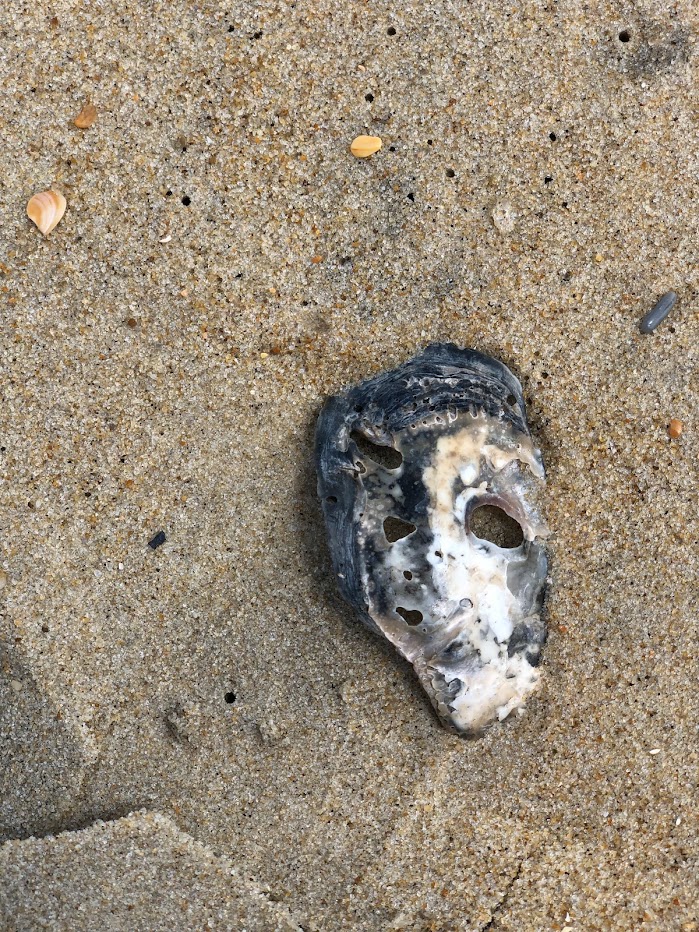
    I’m standing at the ocean’s edge, contemplating the surf. We did return recently from our annual family trip to the Outer Banks. It was a perfect week that offered a reminder of the value of asymmetry. I’m most at home by and in the ocean, Pisces that I am.  That’s because I understand that waves are rhythmic, not symmetrical. And that’s the way I like it. I’ve written before about my love of oyster shells, and I’m adding a picture of one here, where the waves bore a face on its fossil surface. The shells are worn by the tide unevenly, to be sure. Sometimes they’re broken in pieces. But the rhythm, if not the symmetry, remains. The thirty years since my last degree holds smooth places, barnacles, a multitude of colors, times when they clung to the rocks. Times when they rested, suspended over water that was glass. 10, 950 sunrises and as many sunsets, some covered in clouds, but all there, every morning, nonetheless, over the curve of the world I’ve always seen as I look out over the Atlantic. 

    Though I’ll be traveling inland to my residency in Athens, Georgia has its own coast on the Atlantic–one my great uncle fought to preserve. He’s what brings me back to school, back to my family’s home. It’s a book about him I will be writing in this program. That’s the thing about that curve of the world. It comes back around, again, and again, and again. 

    The waves don’t stop. Time doesn’t either. In the past month, the current has sped up exponentially. Or maybe that’s just how it appears as we grow older. I’ve been told that, but I’m not old yet, am I? In the past 20 days, one member of the next generation was married, and another was born. That same sister who craves cardio was the first to point that out, of course. She’s always been more comfortable with speed. I’m the one who wants to slow things down, freeze for a moment, which never works. Better to contemplate the waves that do not end. That’s a language I understand. 

    Aimee Kathryn Toner became Aimee Toner-Cao on June 25th. She wore the dress my mother made for me when her father and I married at the exact same age. The exact same age my mother was when she gave birth to me. The exact same ages, 23, 52, 75 the three of us were on July 6 when my niece, Meryn Viola Policky, daughter of another baby sister, entered the world. There are those summers when everyone is in love, in so many dimensions. And all I want to do is stop. Breathe. Enjoy the savasana. 

    Then again, breathing isn’t stopping, is it? There’s a lot of work our body is doing there, pumping blood through our organs–the water inside that sustains life. The savasana sees our chests rise and fall like the waves I watch before finally deciding to jump in. When I was a child, I was much braver than I am now. I dove under without considering sharks or riptides. The older I get, the more frightened I become, remembering every time I caught the tube wrong and was slammed into the sand. My bones are not as strong, my muscles as malleable, as they used to be. 

    Hence the Shred30. And the going back to school at 52. It’s not as unusual as I thought. Turns out the aunt I will visit during this residency started her own masters at the exact same age, as did her mother, my grandmother. Aunt Sudy came to Aimee’s wedding and proceeded to walk 12,000 steps the next day as she saw the Matisse exhibit at the MoMA. I want to be her when I grow up. I come from a long line of very strong swimmers. So does Aimee. So does baby Meryn. 

    So let the waves come. In rhythm, if not in symmetry.

  • Mark makes fun of the way I stalk my family on Find My Friends (those who have accepted my request, and if you’ve forgotten doing that, Fam, you never read this). I’ll often check it before I go up to read and go to sleep, making sure everyone is tucked snug into their respective beds—in places that now span from Reston to Staunton, San Pancho, New Haven, San Diego. Our clan is what you might call moving targets, and Christmas this year illuminated just that.

    We ended up spending Christmas Eve in a hotel in my hometown. Long story, involving, you guessed it, COVID. The upshot is we are all healthy now and were able to bring the entire extended family together for the first time in two years. So there’s that.

    To be honest, there was something cool about being a tourist on my own turf. Walking downtown, listening to our oldest extolling the virtues of the jewel of the Shenandoah Valley to her fiancé—pointing out a building for lease where she suggested they could open the Toner-Cao School of Music—that was a joyful moment. One of many I’ve had this holiday season.

    Of course, there have been not-so-joyful moments as well—illnesses, injuries, anxiety, tough decisions with no clear answers. I keep coming back to this idea of place, location, though. So that’s the topic of this New Year’s Eve blog post: Where are we? And how hard is the waiting?

    When I open Find My Friends, each family member is represented by a photo marking a separate place and time. Mark is a dark silhouette against a sunny, cumulous mountaintop in Big Sky North Dakota. He was there on a business trip almost twenty years ago. Sara is seven, wearing her pink pea coat, jaunty grey cloche, and matching Latin Quarter smile.  Aimee is in Arlington, about six months old, viewed from the back of her brightly colored stroller. You can just see her head shadowed in profile, and her long baby hair fuzz sticks straight up to catch the afternoon light. It eventually fell over to cover her head like a field of dandelions. From my own phone, I am a pulsing blue dot, completely in the present. All of these images are iconic, from different points of reference.

    Different points of reference—where I feel we all are as we close out 2021. When we zoom in, we can only see what’s right next to us. When we zoom out, everyone appears closer to one another. That can be comforting, but we become overwhelmed when people and events overlap. I don’t need to rehash the state of the world here. Just turn on the news or go on Twitter. It’s all so much.

    Oh, and this afternoon, as if this year is offering us a final “f-you”….BETTY WHITE!

    Still, 2021 has seen some happy stops too. Our blue dots have pulsed over new homes, marriages, births, new creative opportunities. They still happened. Yes, many things ended in 2021, but many began as well.

    Mind you, I’m not going to Pollyanna this shit. There’s much that’s been hard, and much that will be. I also refuse to discount my own privilege. It’s been, and will continue to be, so much easier for me than it is for so many others.

    But just for today, I’ve decided to look at what IS—right now—at 4:30 on December 31, 2021.

    Right now, Find Me.

    I am 51. Five years ago, as I awaited biopsy results, if someone could have guaranteed me I’d be here to write this today, I’d have dropped to my knees.

    I baked bread for dinner. I used the Poolish method, and, if you haven’t tried it and are willing to be patient, you should. It’s worth it. Oh yeah, patience. There’s that.

    And speaking of dinner, it’ll just be me, my cat, and my husband of 28 years. Thanks to Omicron, other plans fell through. But we’ll have pork scallopini and black-eyed peas and greens like my mom always taught me to do. We’ll HOPEFULLY watch Georgia beat Michigan in the Peach Bowl. Mark’s going to set up a firepit, and we might stay up to watch the ball drop.

    Wait, I’m already thinking too far ahead. Right now, I’m sitting at my counter wishing everyone a Happy New Year. The song I’ve chosen to close out of 2021 is Bruce Springsteen’s “If I Should Fall Behind.” It was released in 1992, 30 years ago, from his album Lucky Town. It’s a reminder to appreciate everyone, to try to meet them in their place, and to offer them, and ourselves, grace—wherever on the map we happen to be.

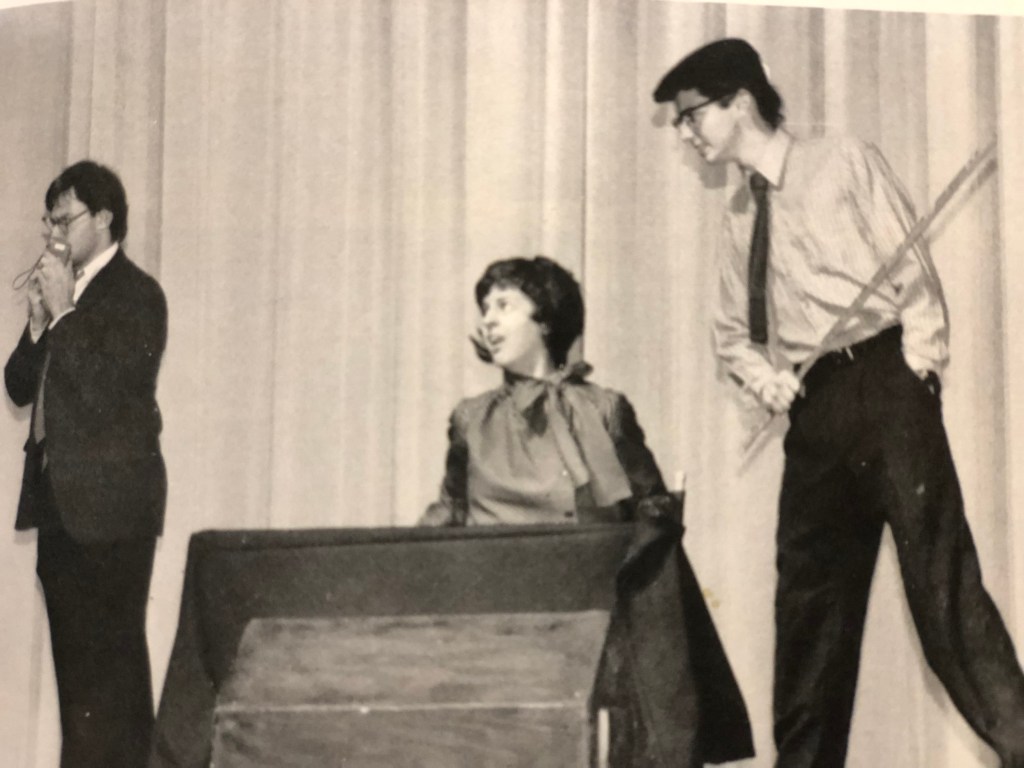
  • Valerie, in another skit I am sure she wrote–collaboratively.

    This morning, I came across a rewrite of Shel Silverstein’s The Giving Tree. Yes, the story that, in adulthood, we all come to see in a more realistic and pessimistic light. Trust me, I know. We actually performed a play version of it at Blessed Sacrament Elementary School when I was in the fourth grade. I think I played one of the apples. It was a very 70’s version of Catholic school guilt. So I was thrilled to find The Tree Who Set Healthy Boundaries by Topher Payne. Here’s the link to the piece: https://www.topherpayne.com/giving-tree

    “Perfect!” I typed as I shared the link on Twitter. “Now if someone can fix the ending to Charlotte’s Web…hey, I have an idea.”

    I have often said that To Kill a Mockingbird made me want to be a teacher, but Charlotte’s Web made me want to be a writer. If anyone could write about friendship as concisely, as gorgeously, as E.B. White, well, I wanted to be that person. And I didn’t used to have a problem with the ending. Until I had to read it aloud to our oldest child.

    “Hey, thanks for throwing me under the bus!” Mark said after he finished it for me and tucked her in. “What a great thing to read to a child…’and Charlotte died…ALONE.’” I couldn’t argue. I had dissolved during the paragraph where Wilbur concedes the unevenness of their relationship, the fact that she saved him, but he never did a thing for her, before she corrects him and says, “…but you were my friend.”

    Aimee was five, I think, and at the time, I dried my tears and took the typical Sally-the-Optimist stance. “But what about Nellie, Aranea, and Joy? What about her daughters? Wilber saved them; he told them all about their mother.” I actually do think there is a sequel too, right? Something about Wilber’s Great Adventure? It is true that the story never really ends with a single person, a single life.

    The reality is, though, there are those mornings we wake up and realize we are Wilber, grieving someone unreplaceable. Before those babies dropped from the barnyard ceiling at first light, he was gutted. I suppose there were times when he felt that emptiness for the rest of his days, even as he lived to see generations of Charlotte’s progeny have other lives, maybe save other pigs. 

    Gutted. It’s the only word I’ve had since I found out earlier this week that my friend Valerie Weiss died. Her Facebook page, and her sister’s, are full of tributes to this high school classmate–inventive mother, passionate environmental scientist, compassionate veterinarian–talented high school actress–and, in a final act of giving, an organ donor. The list goes on. The memory of her I’d like to share, however, is the one of her as a writer.

    Valerie Weiss was my first, and probably my best, writing partner. Notice I don’t say writing “teacher,” writing “coach” or “editor.” I’ve had some amazing folks in those categories. I choose the adjective partner deliberately. The thing is, Valerie was always the smartest kid in the class. I knew that from the time I met her in the eighth grade. But what made her so special is how she used those smarts. Rarely to produce work on her own, for herself, but to collaborate. To make the singular that much better. That’s what she helped me do when we wrote the trial for Macbeth in our AP Government class. We sat (I think it was actually in her living room) with a group of students, tossing out ideas, and Valerie and I wrote them down, combined them, and wrote a script. I was the lead defense attorney; we got to perform the trial in the Staunton Circuit Court, and we got Macbeth off. I delivered the lines of the final argument, but I’m pretty sure Valerie wrote them. 

    In December of that year, we sat in her kitchen and wrote our senior Christmas show. This time, it was just the two of us. Valerie took calls in-between our work to counsel friends with relationship issues. She always listened, calmly, and gave advice that was far beyond her years. I think the night we wrote the senior skit was when I realized that Valerie wasn’t just the smartest kid in our class, she was also the wisest. 

    We went to different colleges but stayed in touch. A mutual friend asked if she had gone to William and Mary, and my response was, “No, that was where she went for her FIRST graduate degree, but oh, how I would have loved to have her there when I was.” I told my husband later that I honestly believe, if she had been there with me, I would have been a much better college student. Again, collaboration. When Valerie was around, she never made us feel inferior, (even though we usually were), she never made us feel self-conscious or awkward (which I often was and still am). When Valerie was around, we were our best selves. We were better.

    Gutted. Let me use that adjective one more time. The rule of threes, you know. Faith, hope, and love–Nellie, Aranea, and Joy. Doctor Valerie Weiss. I am so sorry we won’t be getting that coffee on Friday. But I promise I’ll keep telling your story, as best I can, feeling that emptiness at times for the rest of my days. We all will.

    Maybe some folks will click on that link for the rewrite of The Giving Tree and contribute to the Atlanta Artist Relief Fund. I think you would like that. For now, I’ll end with E.B. White

    “It is not often that someone comes along who is a true friend and a good writer.”

    Valerie, you were both. 

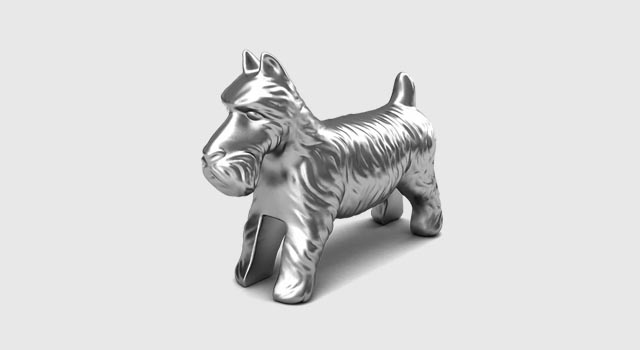
  • I was one of those children whose father never let her win in a game of Monopoly…or poker…or horseshoes. I mean, he would have, if I had actually won. My mother teased him about his competitiveness as I threw down my tin hat, silver dog, and acknowledged defeat. It was always very important to him that, when I won, I would know I’d really earned it.

    To this day, I am grateful for his disdain of the “everyone should get a trophy” attitude. His honesty, if not sometimes brutal, was necessary. The world is a brutal place. But he always made me believe I was capable of beating it. If I applied myself. If I fought to get better.

    He was always honest about his own struggles too. I think that’s why he trounced me in Uno. At our core, we are both dreamers. We both imagine that anything is possible. That if we just keep trying, we can accomplish anything. Make everything and everyone okay.

    Except when we can’t.

    And when we can’t, we need to figure out how to do better.

    My father has an ego. You have to have one to be a physician. And you have to have one to be a fighter pilot. I think it’s the latter that allowed him to be the former, on many levels. That is what I’m thinking about on this particular Veteran’s Day. 

    He landed jets on a postage stamp floating in the water. He flew faster than the speed of sound–on many occasions. He ate bugs as part of survival training. He avoided ground fire and contemplated name, rank, and serial number in case he got shot down. He also taught me how to drive (which, for the record, he has said was far more terrifying than any of those other things.) 

    He also retook linear algebra to get into medical school as he accepted the role of father to a little girl who needed one. He sat next to that little girl when she was receiving chemo infusions 44 years later. Has he served? You betcha.

    But back to the winning. On Veteran’s Day, we don’t thank military personnel for victory. We don’t say, “Thanks for kicking ass.” We say, instead, “Thanks for your service.” I think that is one of the most important lessons my father taught me. That real winning is just that. Service. 

    In recent years, Dad has become a hospice volunteer. Not wearing the title of retired diagnostic radiologist, but as a civilian having gone through the training like everyone else. The interesting thing about his hospice work is that he has fallen back on another identity–that of veteran. Dad naturally gravitated towards retired service members even before he considered training for hospice. He loves history, and he is a fantastic listener. So I think it was, at first, a fascination with the details of their stories.

    Still, it was always more than that. He was raised by his own father, another Navy veteran, to honor sacrifice. To try to give people the acknowledgement of a job well done–a promise honored. I’ve seen him collect the medals of friends, place them in shadow boxes to hang in the homes of their children. I’ve seen him research flight records and make contacts with his own squadron and others’ to verify, validify, missions completed long ago. He is a participant in a specific initiative entitled, “We Honor Veterans.” I’ll take this opportunity to share the website here: https://www.wehonorveterans.org/ It’s an offshoot of hospice that addresses the particular needs of veterans and their families. Check it out. They do good work. And Happy Veterans Day. In the name of service–a human victory. The best kind.

  • On Saturday, for reasons out of my control, I missed a memorial service. I did, though, get to watch it online; I’m so glad I did.

    This was the stepmom of a dear friend from college, and the service was full of people, music, and remembrance of a special woman I met on a few occasions. It was one of those events where the love in the chapel was palpable, even on the screen. She did so much in her life. But what was abundantly clear was that she also WAS so much to so many. The last person to speak was her son, my friend’s baby brother. He’s a graduate of Berklee–a gifted musician and also, apparently, a gifted writer and speaker. The bookends of his speech stood out to me; they reflect so much of what this fall has been. I’ll explain.

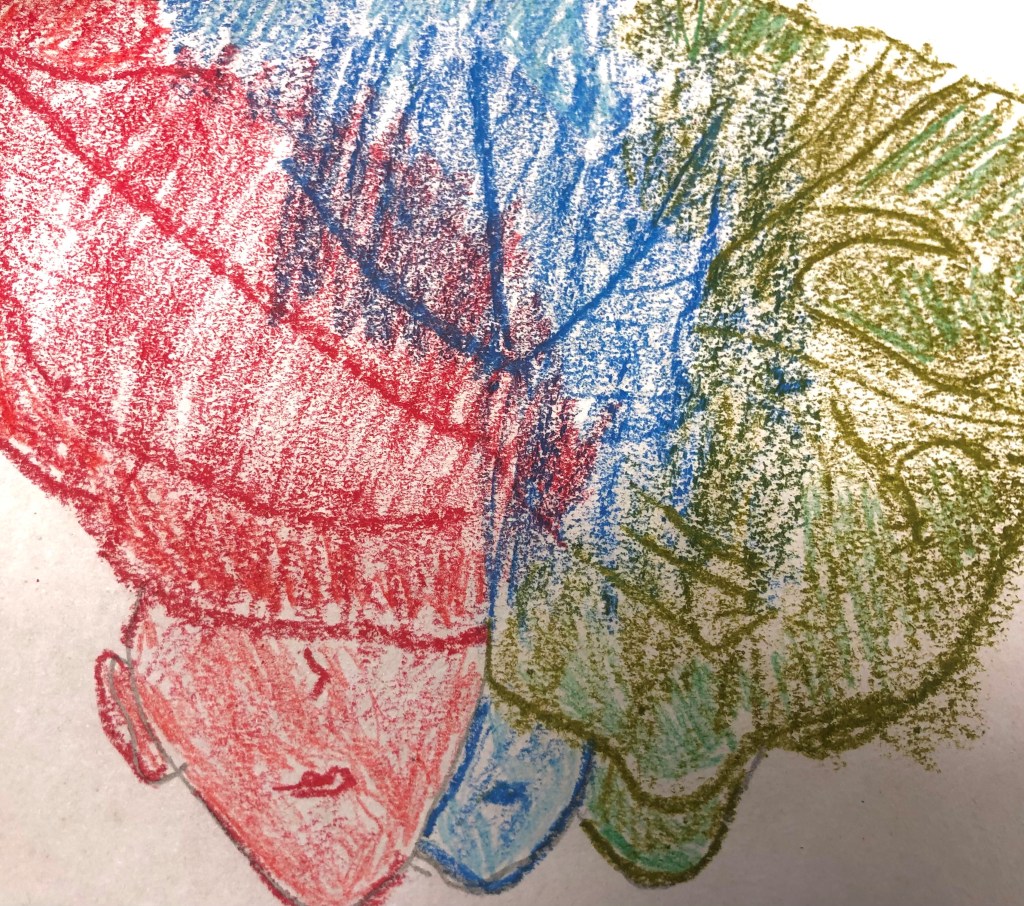
    Sean, my friend Amy’s brother, began speaking about the Japanese proverb of three faces. It is, on the surface, a rather cynical view of humanity. In short, all people have three faces–the one they show the world, the one they show those closest to them, and the one they keep hidden from all. This face is supposedly their truest, known only to themselves. Sean said that his mother Sandy wasn’t like other people–that she lived her life with a single beautiful face; she was always her most authentic self, dedicated to her family, her friends, her community, and the art and music that make everything better. Her son, with the most lovely humility, pondered how special that is to be someone with one true face. How lucky he is that this person was his mother. 

    I have a confession to make now. I had the service on, speakers plugged in, everything projected onto my giant double screen. My laptop screen was also visible, open to my third period’s personal narratives. 

    It’s the end of the quarter. Everyone is under water, which isn’t unusual this time in the fall; however, it’s magnified in the fall of 2021. We all have had to relearn how to school. Only now, about nine weeks in, am I feeling a stride, a rhythm through a routine of yoga, morning pages, a walk and a half-hour drive I didn’t have to make. A routine of walking masked through crowds of bodies I’m not used to, extracurriculars I haven’t had to sponsor in person, actual physical books and papers to shuffle. If I’m feeling this way, I can only imagine the students and how they’re feeling. Only now, almost nine weeks in, I sense them in the lane beside me, hitting their stride too.

    So I had Sandy’s memorial service on one screen, their narratives on “A Place Called Home” on the other. Of course, nothing got graded in the hour-and-a-half of the service. It was too beautiful. My friend and her family deserved my full attention, and they got it. 

    Afterwards, I clicked off the YouTube link and went back to my essays. This is when the proverb of the three faces came back to me. Writing is hard. Beyond the grammar, mechanics, sentence fluency, comma splices–just getting them to use details, to “show” instead of “tell” to quote that trope. We just finished A Raisin in the Sun, so their assignment was to think of a place they consider home, to write about that place in as vivid detail as possible and explain what makes it so special. I encouraged the active present tense, sensory imagery. I showed them models of creative nonfiction that included everything from the knobs of an oyster shell to cleaning toilets.

    These past two class periods, I have been conferencing with each student on their rough drafts. Yes, I am correcting comma splices and hopefully fostering the use of more effective language. But I’m also doing something else.

    I’m seeing their real faces. Here’s the thing: last year, there were some students I never laid eyes on. They were not required to turn on their cameras. I can’t tell you how many kids have come up to me in the hall since August to say hello, reminding me of their icon, an assignment they turned in, that time they typed in the chat during a movement break when I was dancing on camera with our Russian Blue…

    I would lay down my life for that cat.

    So maybe we did get to know each other a little bit. That’s the odd thing about the Pandemic and the Zoomosphere. The lines between home, school, and work were blurred. I know plenty of people who pride themselves on using the “two sets of keys” method for setting boundaries–one set for work, one set for home. I respect that, but I personally have always kept all my keys on one ring. My parenting, writing feed my teaching. My teaching feeds my writing and parenting. I’ve never been good at hiding my face, so I made the decision long ago not to try.

    But in school, virtual or in-person, students come together and do just that–create a visage to protect themselves. Sometimes what is at home, what is inside them, is a little too real. Social media doesn’t make it any better. I’d argue it creates a fourth face even. Think about Snapchat filters for a moment if you disagree with me.

    I promised my students, with this narrative assignment on home, that they could write without a filter. Yes, certain things once put into words must be addressed. Still, students had the freedom to be honest about that place, those people, who make them feel comfortable. The places and people who allow them to be themselves. The places and people they call home. For some, it was a tuna sandwich with jalapenos. For some, a cat, a cousin, the ocean, the basketball court. Student after student showed me their faces–or at least a little more of them. I am so grateful for that.

    I do believe that’s how we will help each other through this–this time both miraculous and devastating–two sides of the same blade. The same face. I don’t suppose you can have one without the other. The last 20 plus months have left marks; they run the gamut from scars to blemishes to wrinkles. But maybe some of those wrinkles are laugh lines. Some of those scars and blemishes are reminders of what we’ve overcome. Something to be proud of. I don’t mind stepping out into the golden light of fall and showing my face. I feel blessed that some of my students, with their words, felt like they could do the same. 

Design a site like this with WordPress.com
Get started